


What's Happening?
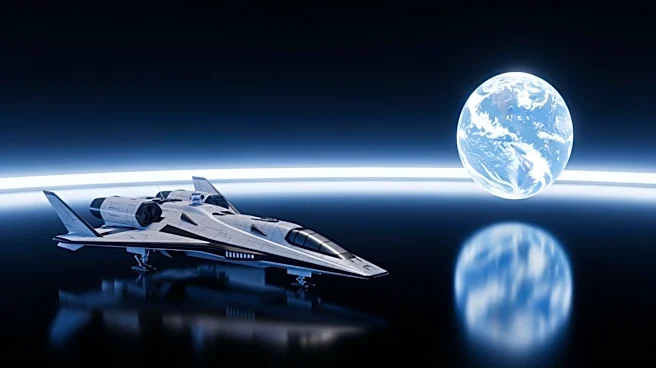
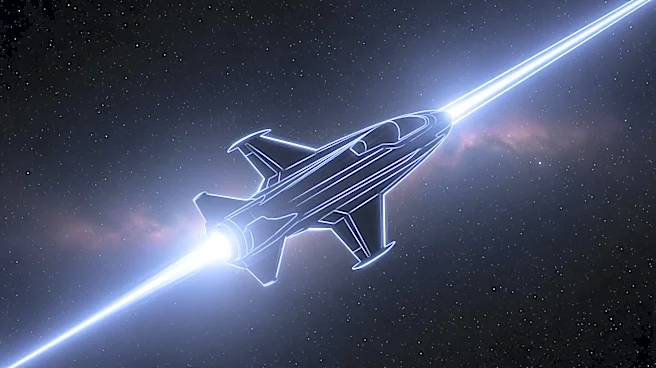
A groundbreaking study published in Advanced Science reveals that laser light can propel spacecraft using graphene, a material known for its strength and lightness. This discovery suggests a potential shift towards fuel-free propulsion systems, which
could significantly reduce the cost and complexity of deep space missions. The study demonstrated that graphene aerogels, when exposed to laser light in a microgravity environment, can accelerate, offering a glimpse into how light could be harnessed for precise space travel. This advancement could disrupt traditional fuel-based propulsion systems, opening new possibilities for space exploration.
Why It's Important?
The ability to propel spacecraft without traditional fuel could revolutionize space exploration by reducing mission costs and increasing efficiency. Fuel is a major expense and weight factor in space missions, and eliminating its need could extend mission durations and enable more ambitious exploration goals. This technology could also lead to more sustainable space travel, as it reduces reliance on finite fuel resources. The implications for the aerospace industry are significant, potentially leading to new technologies and methods for exploring the cosmos.
What's Next?
Further research and development are needed to refine this laser propulsion technology and assess its practical applications in space missions. Scientists will likely conduct additional experiments to optimize the use of graphene aerogels and laser light in various space environments. If successful, this technology could be integrated into future spacecraft designs, potentially transforming how space agencies and private companies approach mission planning and execution. The next steps will involve scaling the technology for larger spacecraft and testing its viability in real-world space missions.