





What's Happening?
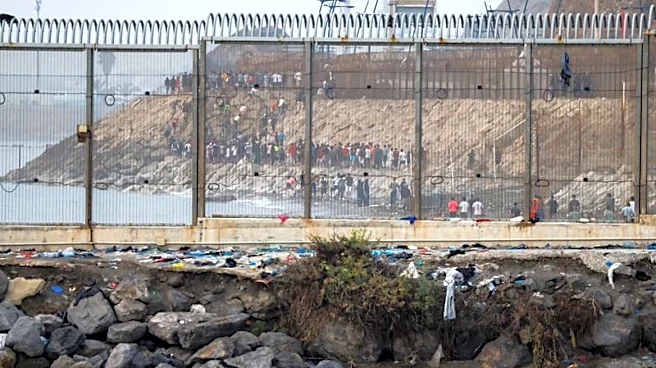
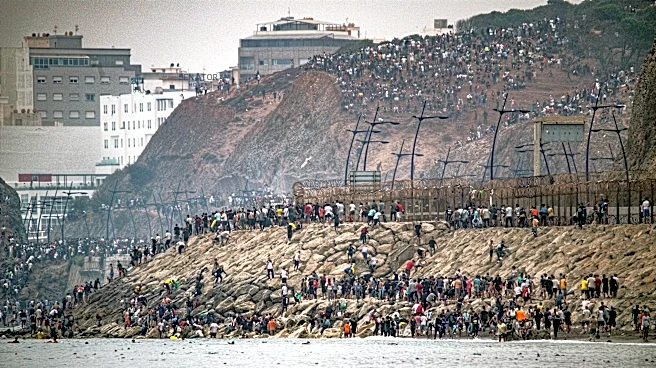
The Trump administration has criticized Spanish Prime Minister Pedro Sánchez for the recent migrant surge into Ceuta, a Spanish territory in North Africa. U.S. President Donald Trump described the situation as an 'invasion' and warned of similar consequences
for the U.S. if Republicans are not elected. The U.S. Department of State attributed the crisis to Spain's migration policies, which they claim facilitate mass illegal migration into Europe. The situation in Ceuta has become a political flashpoint, with neighboring European countries tightening their border controls and calling for Spain to be suspended from the Schengen area.
Why It's Important?
The U.S. criticism of Spain's handling of the Ceuta crisis highlights the international dimensions of migration issues and the potential for political exploitation. The situation underscores the challenges of managing migration flows and the need for coordinated international responses. For Spain, the crisis tests its border management capabilities and diplomatic relations with other countries. The incident may influence public opinion and policy decisions regarding migration and border control in both Europe and the U.S. The Trump administration's response reflects broader political debates about migration and border security.
What's Next?
In response to the crisis, European countries may engage in discussions to address the root causes of migration and explore long-term solutions. Spain is likely to continue reinforcing border security and providing humanitarian aid to those affected. The European Union may face increased pressure to implement stricter border controls and address the underlying causes of migration. The situation may also prompt further diplomatic engagements between Spain and Morocco to manage the border effectively.