





What's Happening?
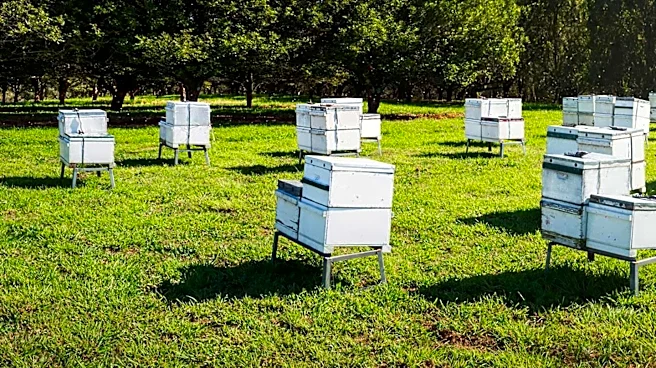
David Bradshaw, a 70-year-old beekeeper, is working to keep his family-owned Bradshaw Honey Farms operational in Visalia, California. The farm, originally founded by his father in 1958, has been a family affair, with Bradshaw's daughter and son also involved
in its operations. Despite facing numerous challenges such as rising costs, declining domestic honey production, and parasitic mites affecting bee populations, Bradshaw remains committed to the legacy of the farm. The farm's primary revenue comes from renting bees for pollination services, although it also sells honey and beekeeping equipment.
Why It's Important?
Bradshaw's story highlights the broader challenges faced by small-scale agricultural businesses in the U.S., particularly those reliant on natural processes and subject to environmental changes. The decline in domestic honey production and the influx of cheaper imported honey products pose significant economic threats. Additionally, the impact of parasitic mites on bee populations underscores the vulnerability of agricultural ecosystems. Bradshaw's efforts to sustain his farm reflect the resilience required to maintain family-owned businesses in the face of economic and environmental pressures, serving as a microcosm of the struggles faced by similar enterprises nationwide.
What's Next?
Bradshaw plans to continue adapting to the challenges by diversifying income streams and managing bee health proactively. The farm's future depends on overcoming environmental hurdles and economic pressures, which may require innovative solutions and potential support from agricultural policies aimed at protecting small farmers. The ongoing battle against parasitic mites and the need for sustainable practices will likely shape the farm's operations in the coming years.