
What's Happening?
A dispute over the Panama Canal has intensified tensions between China and several Latin American countries, including the United States. The conflict arose after Panama's Supreme Court nullified concession
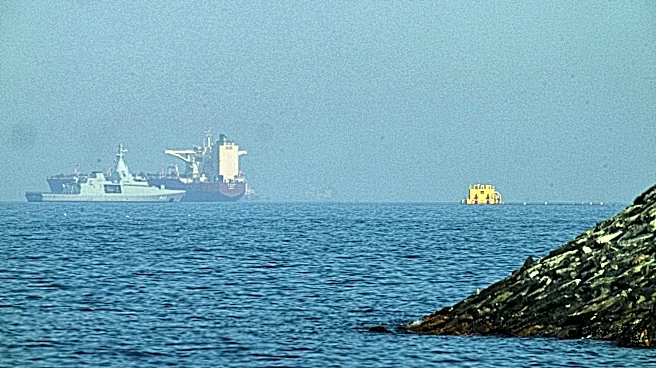
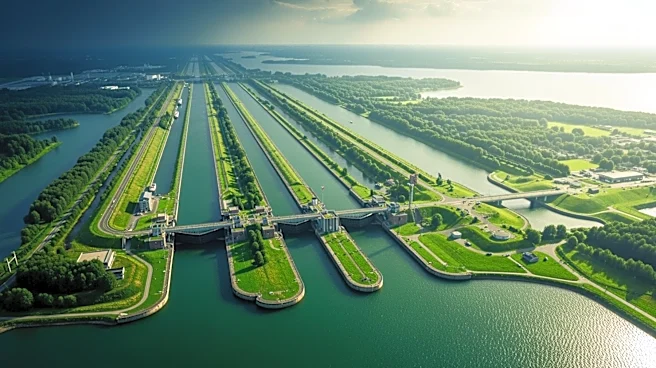
contracts for the Balboa and Cristóbal terminals, previously leased to a Hong Kong-based company. In response, China has detained numerous Panamanian ships, which is seen as retaliation. The U.S. and five Latin American countries issued a joint statement condemning China's actions as economic coercion. The Panama Canal is a critical waterway for global trade, and the U.S. relies heavily on it for container traffic and naval operations.
Why It's Important?
The Panama Canal is a strategic asset for global trade, and any disruption can have significant economic implications. The U.S. and China are major players in the region, and their rivalry over the canal reflects broader geopolitical tensions. China's actions could be seen as an attempt to assert its influence in Latin America, challenging the U.S.'s traditional dominance. The situation could lead to increased scrutiny of China's economic practices and its role in global trade. For Panama, the dispute highlights the challenges of balancing relations with major powers while maintaining sovereignty.
What's Next?
The U.S. and its allies may increase diplomatic efforts to resolve the dispute and ensure the stability of the Panama Canal. China may continue to assert its economic interests in the region, potentially leading to further tensions. Panama may seek to strengthen its legal and diplomatic frameworks to protect its interests and maintain control over the canal. The situation could also prompt discussions on international trade regulations and the role of major powers in global commerce.
Beyond the Headlines
The dispute raises questions about the balance of power in Latin America and the role of international law in resolving economic conflicts. It highlights the potential for economic measures to be used as tools of geopolitical influence. The situation also underscores the importance of multilateral cooperation in addressing global trade challenges and ensuring the stability of critical infrastructure like the Panama Canal.