






What's Happening?
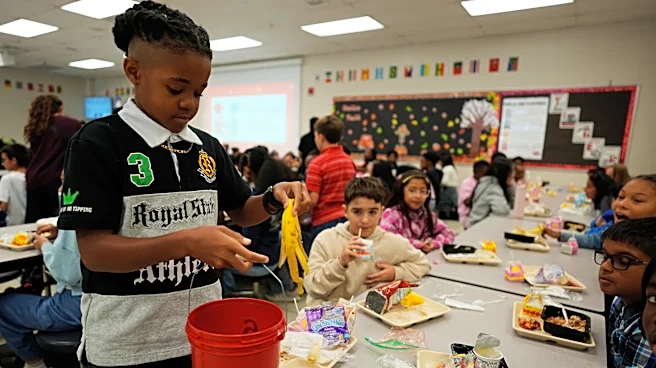
Across the U.S., schools like Lovin Elementary in Lawrenceville, Georgia, are actively implementing composting programs and 'share tables' to significantly reduce cafeteria food waste. Students at Lovin Elementary collect leftover lunch scraps, such as apple
cores and banana peels, for an outdoor compost bin, and uneaten salad scraps are fed to the school's chickens. Unopened milk and other recoverable items are placed on share tables for other students to take or for the school's food pantry. This initiative has led to a nearly one-third reduction in food waste at Lovin Elementary after its initial food audit in 2018. Baltimore City Public Schools, serving over 76,000 students, also utilizes share tables and composting, with some schools having a 33-acre learning farm to educate students on food resources. The World Wildlife Fund's Food Waste Warriors program, which has worked with over 1,000 schools, estimates that U.S. schools could be wasting approximately 530,000 tons of food annually, costing $1.7 billion.
Why It's Important?
The widespread adoption of composting and share tables in U.S. schools holds significant environmental and economic importance. Annually, tons of cafeteria food waste contribute to methane emissions in landfills, a potent greenhouse gas. By diverting food scraps to compost, schools help mitigate climate change and create valuable organic matter for soil enrichment. Economically, reducing food waste can save schools substantial amounts of money, which can then be reallocated to other educational resources. Furthermore, these programs foster environmental stewardship among students, teaching them about sustainability, resource conservation, and the impact of their choices on the planet. The educational aspect, as highlighted by teachers, transforms cafeterias into learning environments where students gain hands-on experience with sustainable practices, potentially influencing their habits at home and in their communities.
What's Next?
The U.S. Department of Agriculture (USDA) continues to provide resources and guidance for schools to reduce waste, including conducting food waste audits, creating share tables, and reassessing food procurement and preparation. However, school budgets and federal meal requirements can pose challenges to implementing new strategies, with composting sometimes requiring additional staff. Experts like Pete Pearson, a World Wildlife Fund vice president, emphasize the importance of involving students in the solution to overcome these hurdles. Continued collaboration between schools, organizations like the World Wildlife Fund, and government agencies will be crucial for expanding these initiatives. The success seen in schools like Lovin Elementary suggests a path forward for other districts to adopt similar programs, potentially leading to a broader national impact on food waste reduction and environmental education.
Beyond the Headlines
Beyond the immediate benefits of waste reduction and cost savings, these school-based initiatives have deeper implications for societal change. By engaging students directly in composting and food recovery, schools are cultivating a generation that is more aware of environmental justice issues and pollution. This hands-on learning experience can lead to a shift in consumer behavior and a greater appreciation for food resources. The 'cafeteria as a classroom' model promotes a holistic understanding of sustainability, connecting food choices to environmental impact and community well-being. The practice of sharing unclaimed food items with school food pantries also addresses food insecurity within communities, demonstrating a practical application of resourcefulness and compassion. This integrated approach to waste management and education could foster a more sustainable and equitable food system in the long term.