





What's Happening?
Kimco Realty is continuing to revise its designs for the second phase of its Wilton Campus redevelopment at 15-21 River Rd. in Wilton, Connecticut, in response to feedback from local land-use boards. The Architectural Review Board (ARB) has encouraged
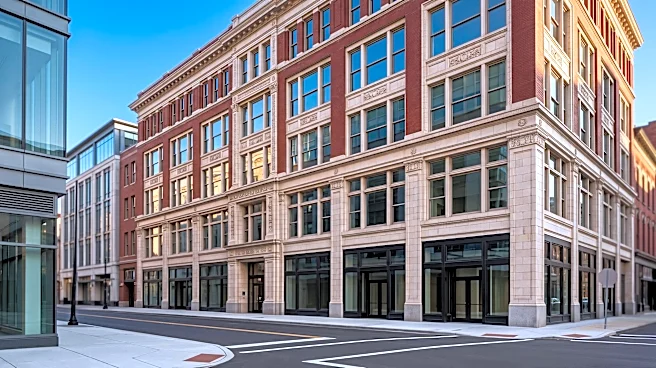
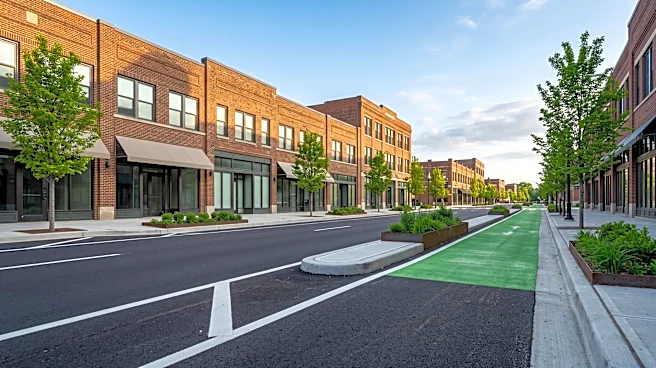
Kimco to further refine the architectural character of the proposed 225-apartment development, seeking less repetition and a design more aligned with Wilton Center's aesthetic. The revised plans, presented by Beinfield Architecture, include scaling back corners of Building C and incorporating a red-brick façade and sloped roof for Building D to evoke a barn or old warehouse design. However, the project faces an unresolved sewer capacity issue, as Kimco's request for a 17,532-gallon-per-day increase in sewer allocation was not acted upon by the Water Pollution Control Authority (WPCA). Wilton's projected sewer demand, including approved and pending projects, slightly exceeds the town's contractual limit with Norwalk.
Why It's Important?
This development highlights the complex interplay between urban development, local planning regulations, and essential infrastructure capacity in U.S. communities. Kimco Realty's project, a significant residential undertaking, is subject to detailed design scrutiny to ensure it integrates harmoniously with the existing character of Wilton Center. The ARB's feedback emphasizes the importance of architectural aesthetics and 'human scale' in new constructions, reflecting a broader trend in urban planning to prioritize community integration over purely functional designs. More critically, the unresolved sewer capacity issue poses a substantial hurdle, illustrating how infrastructure limitations can directly impact the feasibility and timeline of large-scale developments. This situation underscores the challenges municipalities face in balancing growth with existing resource constraints, potentially affecting housing supply and economic development in the region.
What's Next?
Kimco Realty will likely continue to refine its architectural designs for Phase II, incorporating the ARB's suggestions to enhance the project's aesthetic appeal and integration with Wilton Center. The more pressing issue remains the sewer capacity. Kimco's engineering consultant has proposed solutions, such as reallocating reserved capacity and revising flow calculation methods, but the WPCA has yet to act on these suggestions. Town officials are also exploring options, including reducing infiltration into the sewer system and negotiating with Norwalk for additional capacity. Until the sewer allocation is approved, the Phase II proposal cannot proceed. This ongoing negotiation and technical assessment will be critical in determining the project's future, with potential delays or modifications depending on the resolution of the infrastructure challenge.
Beyond the Headlines
The situation in Wilton Center reflects a broader national challenge where aging infrastructure and increasing population density strain municipal services. The debate over sewer capacity is not merely a technical one; it has significant implications for local economic development, housing affordability, and environmental sustainability. The town's conservative approach to sewer allocation, while prudent for managing resources, can inadvertently create barriers to much-needed housing and commercial growth. This case also highlights the power of local planning boards and community input in shaping development outcomes, demonstrating how citizen and expert feedback can lead to more thoughtful and context-sensitive designs. The long-term implications could include a re-evaluation of infrastructure investment priorities, innovative solutions for resource management, and potentially new models for collaboration between developers and municipalities to overcome such hurdles, ensuring sustainable growth while preserving community character.