
What's Happening?
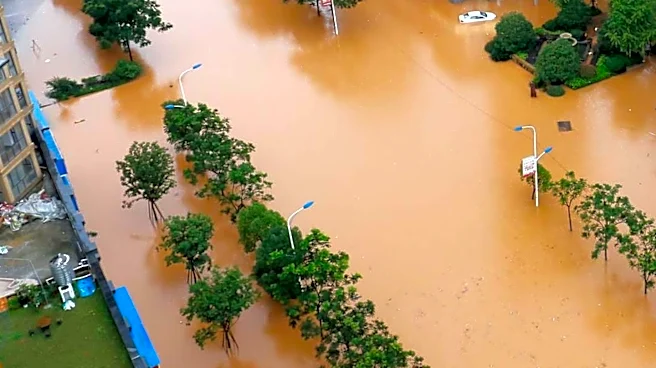
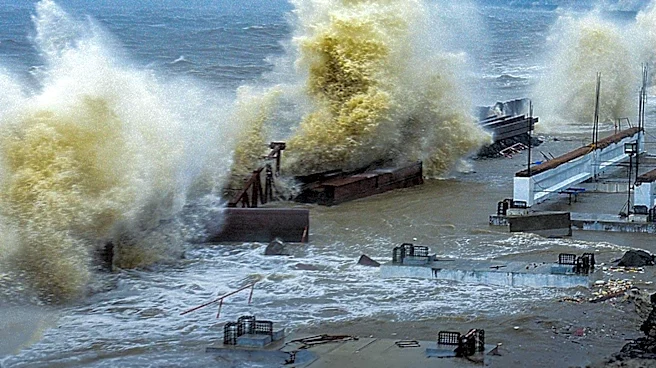
Typhoon Noul, which recently made landfall in southern China, has weakened to a tropical storm. The storm brought significant winds and heavy rain to the region, particularly affecting the provinces of
Guangdong and Fujian. In response to the storm, over 801,000 people were evacuated in Guangdong for safety reasons. The storm also caused major disruptions in Hong Kong, where approximately 350 flights were canceled, leaving around 2,000 passengers stranded. At least 21 people were reported injured in Hong Kong due to the storm. The Chinese Ministry of Water Resources has heightened its flood-control emergency response, especially in areas at risk of mountain floods. Additionally, the National Development and Reform Commission has allocated 100 million yuan ($14.8 million) to aid recovery efforts in the affected areas. This event marks the third typhoon to hit China within a month, following Bavi and Maysak, with Noul being the strongest to make landfall this year.
Why It's Important?
The impact of Typhoon Noul highlights the vulnerability of coastal regions in China to severe weather events, which can lead to significant human displacement and economic disruption. The evacuation of over 800,000 people underscores the scale of the threat posed by such natural disasters. The cancellation of flights and the stranding of passengers in Hong Kong illustrate the broader logistical and economic challenges that accompany such storms. The allocation of substantial government funds for recovery efforts indicates the financial burden these events place on national and local governments. The repeated occurrence of typhoons in a short period raises concerns about the increasing frequency and intensity of such weather patterns, potentially linked to broader climate change trends.
What's Next?
In the aftermath of Typhoon Noul, recovery and rebuilding efforts will be a priority for the affected regions. The allocated funds will likely be used to repair infrastructure, provide aid to displaced individuals, and strengthen flood defenses to mitigate future risks. Authorities may also review and enhance emergency preparedness and response strategies to better handle similar events in the future. The ongoing threat of typhoons may prompt further investment in climate resilience and adaptation measures, as well as international cooperation on climate-related issues.