



What's Happening?
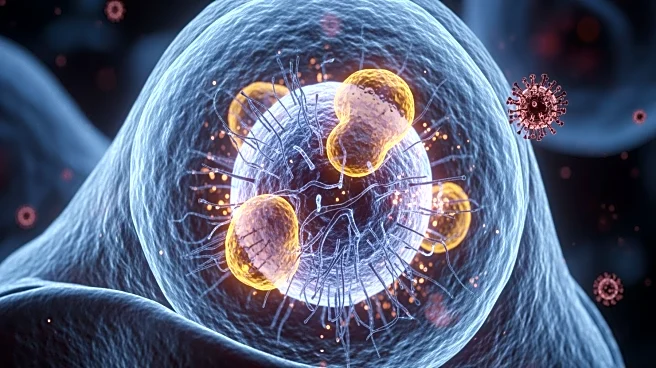
Researchers at the University of Jyväskylä, Finland, have discovered that herpes simplex virus 1 (HSV-1) infection causes significant structural changes in the host-cell nucleus. Using advanced microscopy and computational modeling, the study reveals
that the virus induces nuclear enlargement and alters chromatin organization and nuclear lamina structure. These changes lead to a dramatic softening of the nucleus, which is crucial for understanding the biomechanics of viral infections. The research highlights the role of intranuclear forces in these mechanical changes, providing new insights into how viruses manipulate host cells to facilitate their replication.
Why It's Important?
This research is significant as it enhances the understanding of how viruses like HSV-1 manipulate host cells at a structural level. By revealing the mechanisms of nuclear remodeling, the study could inform the development of new diagnostic and therapeutic strategies for viral infections. Understanding the biomechanical changes induced by viruses can lead to early diagnosis and targeted treatments, potentially improving patient outcomes. The findings also contribute to the broader field of cell biology by highlighting the impact of intranuclear forces on cellular mechanics, which could have implications for other diseases and conditions.