




What's Happening?
Democratic gubernatorial candidate Rob Sand has secured the endorsement of former Iowa Governor and U.S. Secretary of Agriculture Tom Vilsack. Vilsack joined Sand at a farmer roundtable in Ankeny to discuss Sand's plans for supporting Iowa's rural and agricultural
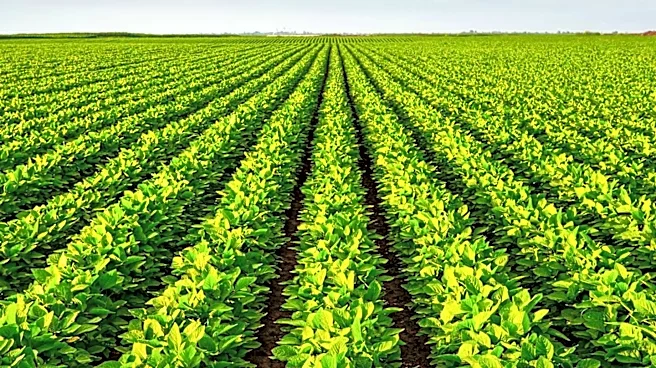
economies. Vilsack expressed enthusiasm for Sand's "innovative" approach, which aims to make farms, rather than farmers, work harder. Sand's "Opportunities for All" policy includes investments in programs that diversify family farms, such as manure digesters that convert manure into renewable natural gas and easily transportable fertilizer. Vilsack, a proponent of this technology, highlighted its potential to create additional on-farm revenue streams. The endorsement also includes over 50 other farmers and former Iowa agricultural leaders who have joined the "Ag Leaders for Sand" group. This group includes former Iowa Secretary of Agriculture Patty Judge and former presidents of the Iowa and National Corn Growers Associations.
Why It's Important?
This endorsement from a prominent figure like Tom Vilsack, who has extensive experience in both state and federal agricultural policy, lends significant credibility to Rob Sand's campaign and his agricultural proposals. Vilsack's assertion that farmers have been in a "farm crisis since 1973" due to a singular focus on productivity, leading to the loss of nearly a million farms, underscores the urgency of Sand's proposed policy shifts. The emphasis on diversifying family farms and investing in technologies like manure digesters could offer a new economic model for Iowa's agricultural sector, potentially benefiting smaller and medium-sized operations that have struggled under the current system. The proposed "Opportunities for All" policy, which also includes raising the state minimum wage, ending privatized Medicaid, and building rural housing, suggests a comprehensive approach to rural economic development. If implemented, these policies could address long-standing issues of economic instability and population decline in rural Iowa, potentially setting a precedent for other agricultural states facing similar challenges.
What's Next?
Rob Sand will continue to campaign on his "Opportunities for All" policy, leveraging Vilsack's endorsement to garner further support from farmers and rural communities across Iowa. The discussion around diversifying farm operations and improving rural economies is likely to become a central theme in the gubernatorial race. Sand's plan to fund these programs through Iowa's Natural Resources and Outdoor Recreation trust fund, which was approved by voters in 2010 but never funded, will likely face scrutiny and debate regarding its feasibility and political will. The contrast between Sand's proposals and those of his Republican opponent, Zach Lahn, who advocates for anti-trust lawsuits against agricultural input companies and protecting Iowa land ownership, will define the agricultural policy debate leading up to the election. The outcome of this election could significantly influence the future direction of Iowa's agricultural and rural development policies.
Beyond the Headlines
The debate over agricultural policy in Iowa, highlighted by Sand's proposals and Vilsack's endorsement, touches upon deeper issues concerning the sustainability and future of American farming. The critique of a system focused "solely on productivity and production" suggests a re-evaluation of the industrial agricultural model that has dominated for decades. The loss of nearly a million farms over the past 50-60 years points to a systemic challenge that extends beyond economic cycles, impacting the social fabric of rural communities. Sand's focus on diversifying farm income through technologies like manure digesters represents a move towards more circular and sustainable agricultural practices, potentially reducing environmental impact while creating new revenue streams. This shift could also empower smaller farmers and foster greater economic resilience in rural areas, challenging the dominance of large-scale operations. The broader implication is a potential paradigm shift in how agricultural success is defined, moving beyond sheer output to encompass environmental stewardship, community well-being, and diversified economic opportunities.