






What's Happening?
Robin Radar Systems, a company headquartered in Delft, Netherlands, is observing a growing demand for its drone-detection radars. Initially established in 2010 with a focus on bird-detection radars for airports and air force bases, the company later expanded
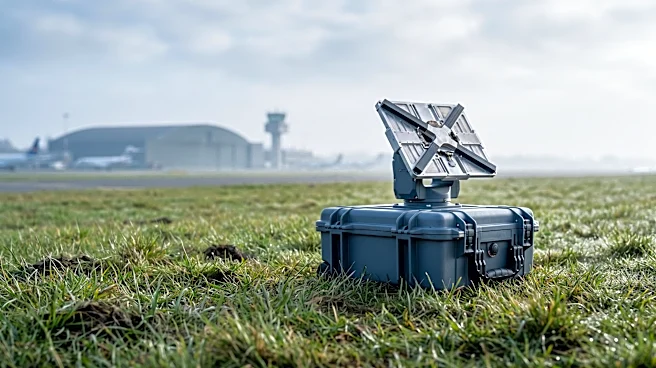
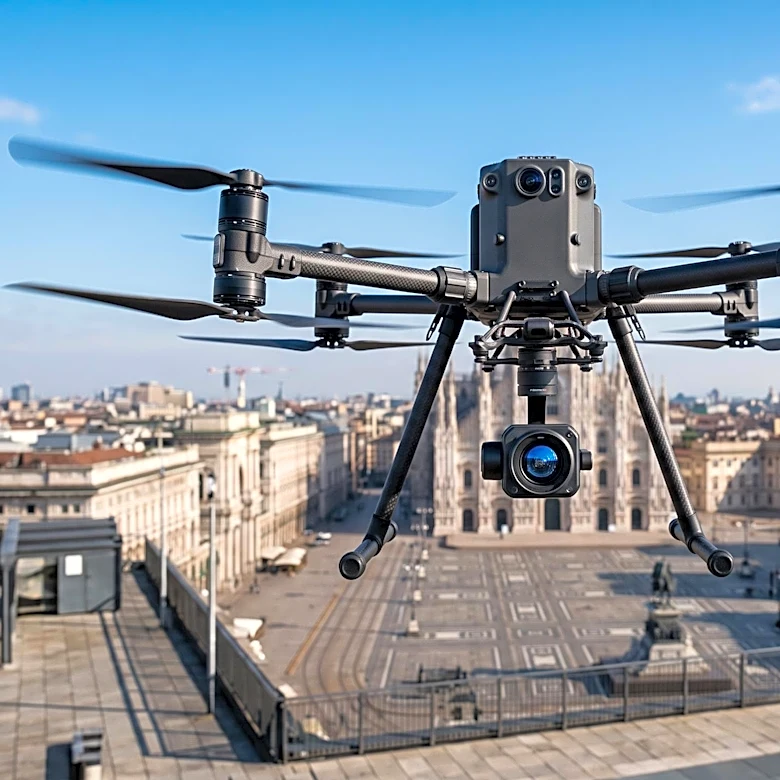
into drone detection for the civilian sector. Following the 2022 Russian full-scale invasion of Ukraine, the Dutch Ministry of Defence supplied Robin Radar's systems to Ukraine, with other European nations also purchasing and donating these systems. This deployment in harsh environments has provided valuable feedback, enabling the company to enhance its technology. The Iris drone-detection radar, Robin Radar's flagship product, specializes in short-range, small-object detection with a base range of 5 km (3.1 mi), ideal for Group 1 and 2 drones. A new software mode has been introduced to extend this range to 12 km, specifically developed to meet Ukrainian requirements for detecting larger Shahed-type drones earlier, at around 7-8 km. Additionally, Robin Radar has developed an on-the-move feature for the Iris radar, allowing it to detect and track while moving at speeds of 100 km/h, addressing concerns about radar emissions making the system visible to adversaries.
Why It's Important?
The increased demand for Robin Radar's drone detection systems highlights a critical and evolving security concern for the U.S. and its allies: the proliferation and sophisticated use of drones in conflict zones and for civilian threats. The experience gained from deploying these systems in Ukraine provides invaluable real-world data, accelerating technological advancements in drone detection and counter-drone measures. This is particularly important for U.S. defense strategies and homeland security, as it informs the development and procurement of technologies to protect critical infrastructure, military assets, and public spaces from drone-related threats. The ability to detect smaller drones at short ranges and larger drones at extended ranges, coupled with mobile detection capabilities, offers enhanced situational awareness and response times. This technological advancement can significantly impact military operations, border security, and event safety within the U.S., potentially saving lives and preventing significant damage. The focus on mitigating radar emissions also underscores the strategic importance of stealth and survivability in modern warfare, influencing future defense technology investments.
What's Next?
The ongoing conflict in Ukraine continues to serve as a proving ground for drone detection technologies, and the feedback from this environment will likely drive further innovations and refinements in Robin Radar's systems. The company's ability to adapt its technology, such as extending detection ranges and developing mobile capabilities, suggests a continuous evolution to meet emerging threats. For the U.S. and its defense contractors, this trend indicates a sustained need for investment in counter-drone technologies, potentially leading to new partnerships, research and development initiatives, and procurement programs. The lessons learned from the deployment of these radars in active conflict zones will undoubtedly influence military doctrine and training for drone warfare. Furthermore, as drone technology becomes more accessible, the demand for advanced detection systems will likely extend beyond military applications to civilian security, including critical infrastructure protection, airport safety, and public event security, creating a growing market for specialized radar solutions.
Beyond the Headlines
The rapid advancements in drone technology and counter-drone measures, as exemplified by Robin Radar Systems, underscore a fundamental shift in modern warfare and security paradigms. The accessibility of drones, from small commercial models to larger, more sophisticated variants, democratizes aerial capabilities, posing challenges to traditional defense strategies. This development raises ethical and legal questions regarding the use of autonomous weapons, surveillance capabilities, and the potential for non-state actors to wield significant aerial power. The 'on-the-move' detection feature, designed to reduce visibility to adversaries, highlights the ongoing cat-and-mouse game between offensive and defensive technologies, pushing the boundaries of electronic warfare and stealth. Beyond military applications, the civilian implications are vast, ranging from privacy concerns related to drone surveillance to the need for robust air traffic management systems for unmanned aerial vehicles. The continuous innovation in this sector reflects a broader societal adaptation to a world where the skies are increasingly contested and monitored.