





What's Happening?
In 1991, conservative commentator and television pundit Pat Buchanan announced his campaign for the Republican presidential nomination, directly challenging sitting President George H.W. Bush. Buchanan's campaign was notable for advocating a new foreign
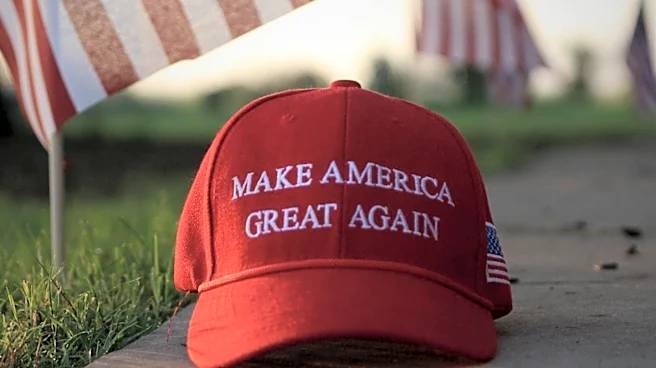
policy centered on an 'America First' ideology. This approach emphasized prioritizing national interests over global leadership, a significant departure from the post-war order that had defined American foreign policy for decades. Buchanan explicitly stated, 'It will be time for a new foreign policy that looks out for America first, but not only America first, but also America second and third as well.' His announcement in New Hampshire signaled a potential shift in the Republican Party's vision, moving towards a more isolationist stance in international affairs and focusing on domestic priorities.
Why It's Important?
Pat Buchanan's 1991 campaign and his 'America First' platform were important because they introduced a significant ideological challenge within the Republican Party, questioning the established post-World War II foreign policy consensus. By advocating for a focus on domestic priorities and a more isolationist approach, Buchanan articulated a sentiment that resonated with a segment of the American electorate. This challenge to a sitting president from within his own party highlighted growing divisions regarding America's role in the world. The 'America First' slogan, though not new to American politics, gained renewed prominence through Buchanan's campaign, signaling a potential long-term shift in political discourse regarding international engagement and national sovereignty. His campaign demonstrated that a significant portion of the conservative base was open to re-evaluating traditional foreign policy doctrines, setting a precedent for future political movements that would also champion similar nationalist sentiments.
What's Next?
While the immediate outcome of Buchanan's 1991 challenge was that President George H.W. Bush secured the Republican nomination, the long-term implications of his 'America First' message continued to resonate within American politics. The ideas he championed, focusing on national interests and questioning global commitments, would periodically resurface in political debates and future campaigns. His campaign laid groundwork for a more skeptical view of international alliances and trade agreements among certain conservative factions. Future political leaders and movements would draw upon similar themes, indicating a persistent undercurrent of nationalist sentiment within the U.S. electorate. The debate over America's global role versus domestic focus, ignited by Buchanan, would remain a recurring theme in U.S. foreign policy discussions.
Beyond the Headlines
Pat Buchanan's 'America First' campaign in 1991 had deeper implications beyond the immediate political contest. It represented a significant cultural and ideological shift, challenging the bipartisan consensus on American global leadership that had largely prevailed since the end of World War II. By questioning the 'post-war order,' Buchanan tapped into a growing unease among some Americans about the costs and benefits of international engagement. This movement highlighted a tension between global responsibilities and domestic needs, and between internationalism and nationalism. The campaign also foreshadowed a broader trend of populist movements that would later emerge, emphasizing national sovereignty and economic protectionism. Buchanan's articulation of 'America First' contributed to a re-evaluation of American identity and its place in a rapidly changing world, influencing subsequent political discourse and policy debates on trade, immigration, and foreign intervention.