






What's Happening?
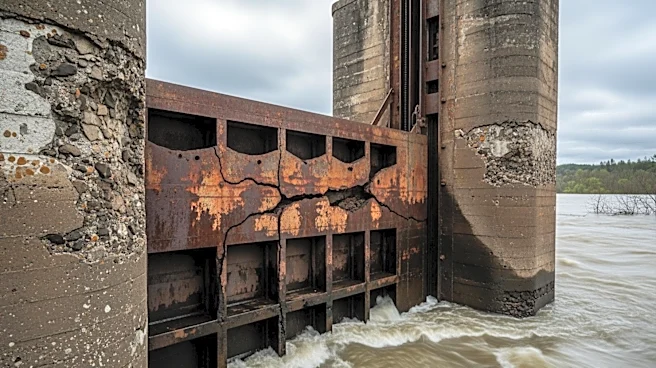
Michigan is grappling with the challenge of maintaining its aging dam infrastructure as unprecedented spring floods threaten to overwhelm the state's capacity to manage water surges. Following the catastrophic dam failures in mid-Michigan in May 2020,
which caused significant flooding and damage, the state had allocated funds for dam safety improvements. However, these funds have been depleted, leaving many dams vulnerable. The state had initially created a dam risk reduction grant program, which awarded $44 million over three years, but this program was not renewed. Additionally, a $6 million Dam Safety Emergency Action Fund is expected to exhaust its resources this year. Many of Michigan's dams are decades old, with over 160 classified as high hazard, meaning their failure could result in loss of life and significant property damage. The state's infrastructure is not equipped to handle the increased frequency and intensity of storms attributed to climate change, according to experts.
Why It's Important?
The situation in Michigan highlights a critical infrastructure challenge that could have severe consequences for public safety and economic stability. The aging dams, if not properly maintained, pose a significant risk of catastrophic failure, which could lead to loss of life, property damage, and economic disruption. The lack of sufficient funding and legislative action to address these issues exacerbates the risk. As climate change continues to increase the frequency and severity of weather events, the need for robust infrastructure becomes more urgent. The potential failure of these dams could also impact local economies, particularly in areas dependent on water resources for agriculture and industry. The situation underscores the importance of proactive infrastructure investment and policy reform to mitigate risks associated with aging infrastructure.
What's Next?
State Representative Bill G. Schuette has introduced a bill aimed at addressing dam safety in Michigan, which includes several recommendations from the Dam Safety Task Force. The bill proposes strengthening regulatory requirements, increasing inspection frequency, and improving design standards for high and significant hazard dams. It also calls for better information-sharing between state and federal agencies. A hearing on the bill is expected in the House Natural Resources and Tourism Committee later this month. The outcome of this legislative effort will be crucial in determining the future of dam safety in Michigan. Stakeholders, including policymakers, environmental groups, and local communities, will likely engage in discussions to ensure that the necessary resources and policies are in place to protect against future disasters.
Beyond the Headlines
The challenges faced by Michigan's dam infrastructure reflect broader issues of infrastructure neglect and climate adaptation across the United States. The situation raises ethical questions about the responsibility of government and private dam owners to ensure public safety. It also highlights the need for comprehensive planning and investment in infrastructure resilience to adapt to changing climate conditions. The potential for dam failures poses not only immediate risks but also long-term implications for environmental sustainability and community resilience. Addressing these challenges requires a coordinated effort between government agencies, private stakeholders, and the public to prioritize infrastructure safety and sustainability.