









What's Happening?
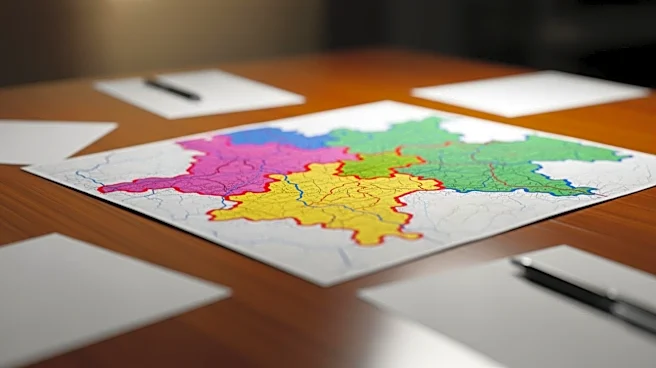
Georgia's Republican legislative leaders have decided to postpone the redrawing of the state's legislative maps, opting instead to focus on tax relief measures and the ratification of the state's gas tax suspension. This decision comes despite Governor
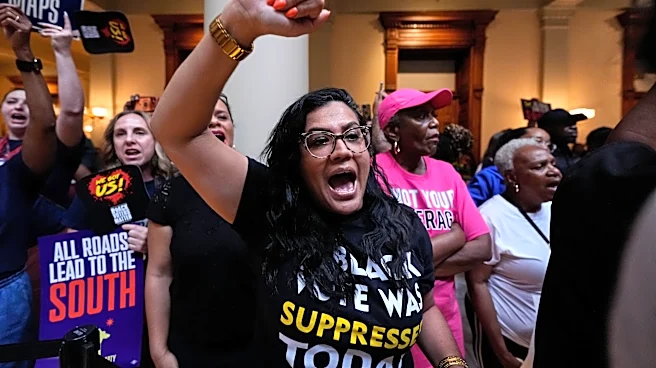
Brian Kemp's call for new electoral maps ahead of the 2028 presidential election. The move is influenced by ongoing court battles across the nation and recent U.S. Supreme Court decisions that have weakened federal Voting Rights Act protections for minority voters. Senator Raphael Warnock has criticized the Supreme Court's recent rulings, describing them as some of the worst in modern history. The decision to delay redistricting has sparked protests and concerns about the potential for increased partisan gerrymandering in Georgia and other Southern states.
Why It's Important?
The decision to delay redistricting in Georgia is significant as it reflects the broader impact of the U.S. Supreme Court's recent rulings on voting rights. By postponing the redrawing of legislative maps, Georgia lawmakers are potentially allowing for the continuation of existing district boundaries, which could affect the balance of political power in the state. This move could have implications for minority voters, as the weakened protections under the Voting Rights Act may lead to increased gerrymandering. The focus on tax relief measures, including the gas tax suspension, indicates a shift in legislative priorities that could impact the state's economic landscape and the financial well-being of its residents.
What's Next?
As Georgia lawmakers defer redistricting, the focus will likely remain on tax relief and other state issues during the special session. The decision to delay may lead to further legal challenges and political debates, particularly as the 2028 presidential election approaches. Stakeholders, including political leaders and civil rights groups, may continue to advocate for fair redistricting practices and increased protections for minority voters. The ongoing court battles nationwide will also play a crucial role in shaping the future of voting rights and electoral map drawing in Georgia and beyond.