
What's Happening?
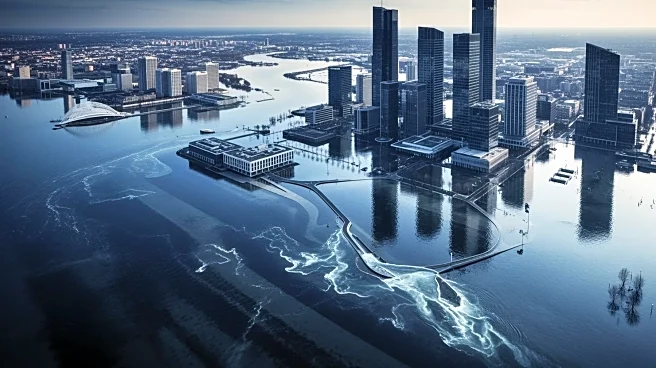
East London is increasingly vulnerable to extreme flooding due to urban development on former marshlands and rising sea levels. Boroughs such as Tower Hamlets, Newham, and Hackney, built on low-lying land,
are at high risk. The loss of natural marshland, which previously absorbed water, has exacerbated the situation. The city's infrastructure, including the Thames Barrier, provides some protection against large-scale river flooding but is insufficient against surface water flooding from local storms. The aging infrastructure and Victorian-era sewer systems are easily overwhelmed, leading to potential sewage contamination. Socioeconomic factors, such as high poverty rates, further increase the vulnerability of residents in these areas.
Why It's Important?
The flooding risk in East London highlights the broader challenges of urbanization and climate change. As one of the most urbanized cities globally, London's impermeable surfaces contribute to rapid surface water runoff, overwhelming drainage systems. The socioeconomic inequities in East London mean that many residents lack the resources to cope with flooding, making it a significant public safety and national security issue. The situation underscores the need for integrated urban planning that includes natural flood management solutions, such as green roofs and rewilding projects, to enhance resilience and reduce flood risks.
What's Next?
To mitigate flooding risks, East London could adopt more natural flood management strategies. Initiatives like planting wetland species and creating green roofs can help absorb water and reduce runoff. Projects such as the East London Waterworks Park and sustainable urban drainage systems at the Queen Elizabeth Olympic Park demonstrate the potential of combining natural and urban infrastructure. Policymakers need to evaluate the effectiveness of these solutions to implement them more widely. As London's population grows, addressing these challenges becomes increasingly urgent to protect vulnerable communities and ensure sustainable urban development.
Beyond the Headlines
The flooding issue in East London also raises ethical and cultural questions about urban development and environmental justice. The loss of natural landscapes for urban expansion has long-term implications for biodiversity and community well-being. The reliance on aging infrastructure highlights the need for investment in sustainable solutions that consider both environmental and social factors. Engaging local communities in flood management strategies can empower residents and foster a sense of ownership and responsibility towards their environment.