





What's Happening?
Two individuals became stranded in their Toyota Tacoma truck while attempting to cross a deep, swift-moving river below Gunlock Falls. As water began to enter the vehicle's cab, the man and woman climbed onto the roof of their truck and contacted 911
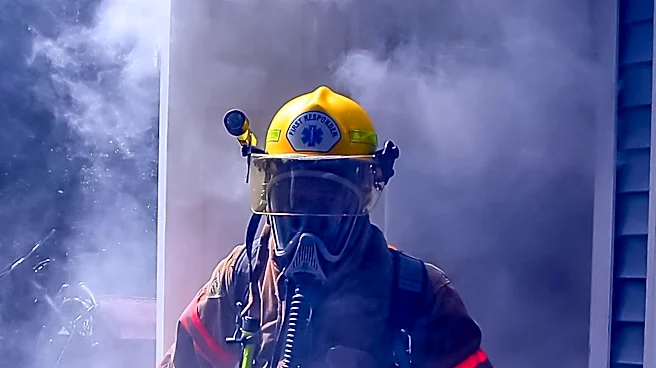
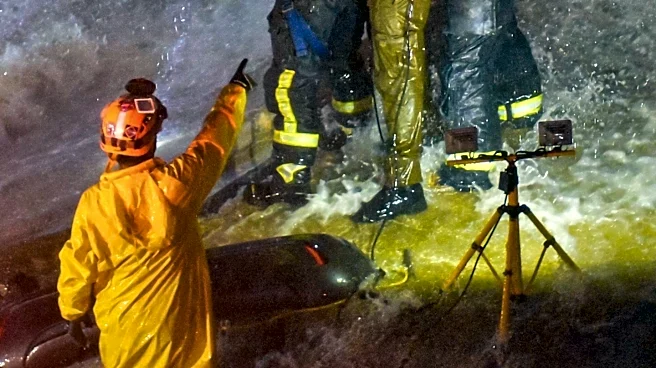
for assistance. Emergency response teams, including Washington County Search and Rescue, Gunlock Fire, Dammeron Valley Fire and Rescue, and Santa Clara - Ivins Fire and Rescue, were dispatched to the scene. These agencies coordinated a technical swift-water rescue operation. The rescue involved positioning two rescuers on the opposite side of the river to establish a tensioned high-line system, which was anchored to trees on both riverbanks. Once the rope system was secured, the stranded individuals were provided with helmets and personal flotation devices, secured to the rescue system, and safely transported to shore.
Why It's Important?
This incident highlights the significant dangers associated with attempting to cross swift-moving water, particularly in areas like Gunlock Falls, which can experience unpredictable water flows. The coordinated response by multiple emergency services underscores the complexity and resource-intensive nature of swift-water rescues. Such events serve as critical reminders for public safety regarding recreational activities near natural water bodies, emphasizing the importance of heeding warnings and avoiding hazardous conditions. The involvement of various local fire and rescue departments, alongside the Washington County Search and Rescue, demonstrates the inter-agency cooperation essential for effective emergency management in rural or challenging terrains. This event also draws attention to the potential risks faced by individuals who underestimate the power of natural water currents, leading to dangerous situations requiring professional intervention.
What's Next?
Following the rescue, authorities will likely reiterate warnings about the dangers of attempting to cross rivers, especially during periods of high water flow, and may consider enhanced signage or public awareness campaigns around Gunlock Falls. The individuals involved may face questions regarding their decision to attempt crossing the river, and there could be discussions about potential preventative measures to avoid similar incidents in the future. Emergency services will review the operation to identify any lessons learned and refine their swift-water rescue protocols. The incident also serves as a reminder for the public to be prepared for unexpected situations when engaging in outdoor activities, including carrying communication devices and understanding local conditions.
Beyond the Headlines
This event underscores a broader issue of risk assessment and personal responsibility in outdoor recreation, particularly in natural environments that can change rapidly due to weather or hydrological conditions. The reliance on advanced technical rescue operations, such as the high-line system, reflects the specialized training and equipment required for modern search and rescue efforts. It also implicitly raises questions about the balance between public access to natural attractions and the need for safety regulations or advisories. The incident could prompt local officials to evaluate the accessibility and safety of areas around Gunlock Falls, especially given that heavy rains can lead to increased water levels and currents. This event serves as a case study for public education on water safety and the critical role of well-equipped and coordinated emergency response teams.