







What's Happening?
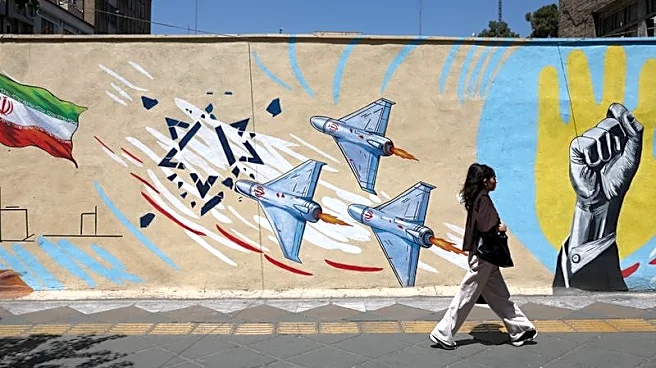
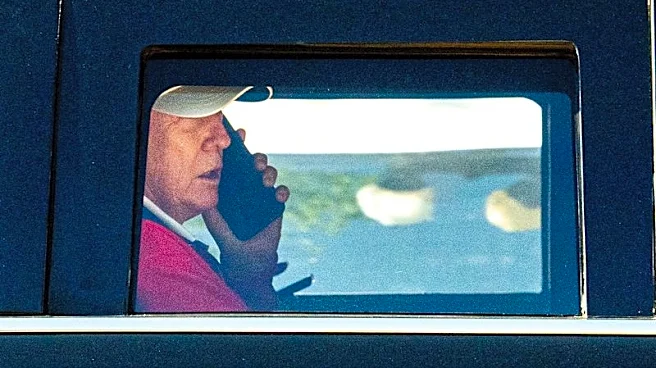
President Trump announced that negotiations with Iran are progressing rapidly, despite Tehran's indication of suspending talks due to escalating violence in Lebanon. Trump claimed that Israel and Hezbollah had agreed to a ceasefire following discussions
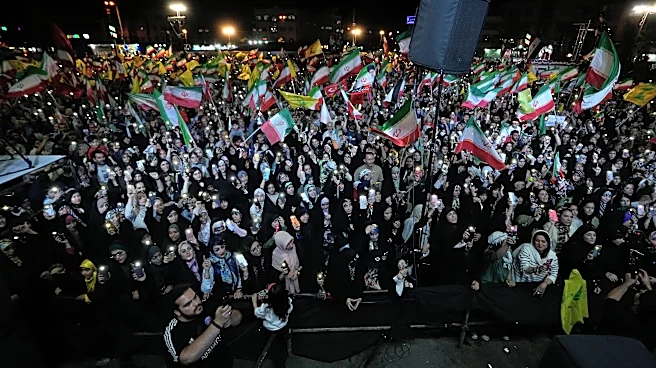
with Israeli Prime Minister Benjamin Netanyahu and intermediaries for Hezbollah. However, Iranian state-linked media reported that talks were paused in protest of Israel's military actions in Lebanon. The situation remains tense as both sides continue military operations, complicating efforts to reach a broader ceasefire agreement.
Why It's Important?
The conflicting reports on the status of U.S.-Iran talks highlight the fragile nature of Middle East diplomacy. The potential suspension of negotiations could impact regional stability and U.S. foreign policy objectives. The situation also affects global oil markets and international relations, as any escalation in the Middle East could have widespread economic and political repercussions. The U.S. aims to de-escalate tensions, but the ongoing conflict between Israel and Hezbollah poses significant challenges to achieving a lasting peace agreement.
What's Next?
The continuation of military actions by Israel and Hezbollah suggests that achieving a ceasefire may be difficult. The U.S. and Iran must navigate complex diplomatic channels to address the broader regional conflict. Future negotiations will likely focus on securing commitments from all parties to halt hostilities. The international community will be closely monitoring the situation, as further escalation could derail diplomatic efforts and lead to increased instability in the region.