







What's Happening?
Several states in the U.S. are implementing laws to restrict the manufacturing and possession of 3D-printed guns, often referred to as ghost guns due to their lack of serial numbers. This legislative push is part of a broader debate over Second Amendment
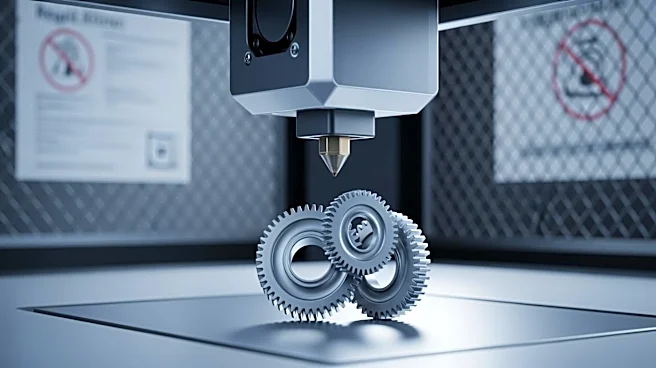
rights. States like Colorado, New Jersey, Maine, New York, Virginia, and Washington have introduced various restrictions in 2026, with California advancing a bill requiring 3D printers to include technology that prevents the printing of firearms. These measures are in response to the increasing recovery of 3D-printed guns at crime scenes, with the Bureau of Alcohol, Tobacco, Firearms and Explosives (ATF) reporting over 27,000 such guns recovered in January 2023. Proponents of stricter gun laws argue that the accessibility of 3D-printing technology poses a significant risk, especially as it becomes more affordable and prevalent in educational settings. However, gun rights advocates claim these restrictions infringe on constitutional rights and do not effectively enhance public safety.
Why It's Important?
The rise of 3D-printed firearms presents a significant challenge to existing gun control measures, as these weapons can be produced without serial numbers, making them difficult to trace. The legislative actions taken by various states highlight the tension between public safety concerns and Second Amendment rights. The debate is further complicated by the technological advancements that make it easier for individuals, including minors, to manufacture firearms. This situation raises questions about the balance between innovation and regulation, as well as the effectiveness of current laws in addressing new forms of gun manufacturing. The outcome of these legislative efforts could set important precedents for how emerging technologies are regulated in relation to constitutional rights.
What's Next?
Legal challenges are expected to continue as states enforce these new restrictions. The case involving Defense Distributed, a company that designs 3D-gun blueprints, is a focal point, with the United States Court of Appeals for the Third Circuit recently siding with New Jersey in halting the distribution of these blueprints. Defense Distributed plans to appeal, potentially taking the case to the Supreme Court. The decisions made in these legal battles could have far-reaching implications for both gun rights and the regulation of 3D-printing technology. Additionally, as more states consider similar legislation, the national conversation around gun control and technological innovation is likely to intensify.