
What's Happening?
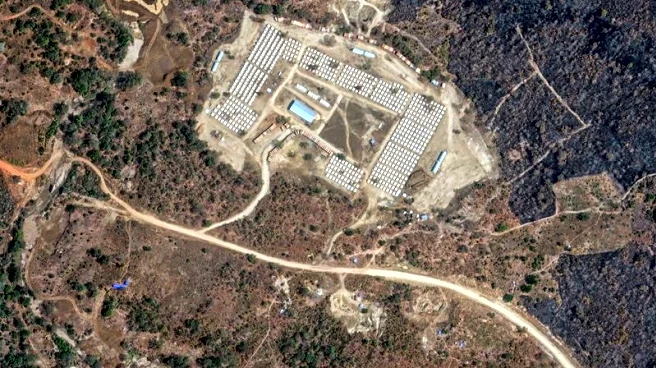
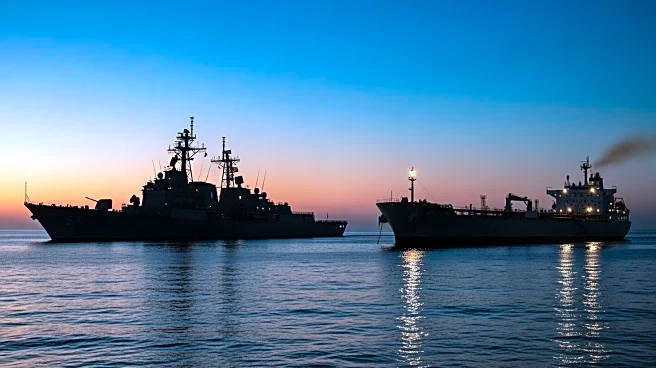
New satellite imagery has revealed U.S. Navy warships operating in the Caribbean Sea near the Gulf of Venezuela. These operations are part of a broader strategy involving the USS Iwo Jima Amphibious Ready
Group (ARG) and other naval assets, including the MV Ocean Trader, a special warfare support vessel. This military presence is in line with President Trump's directive for a 'total and complete blockade' of Venezuelan oil tankers, aimed at increasing pressure on Nicolás Maduro's government. The blockade follows previous U.S. actions, including the seizure of Venezuelan crude oil. The Venezuelan government has condemned these actions, viewing them as an infringement on its sovereignty and an attempt to seize its oil resources.
Why It's Important?
The blockade represents a significant escalation in U.S. foreign policy towards Venezuela, highlighting the ongoing geopolitical tensions between the two nations. The U.S. aims to undermine the Maduro regime, which it considers illegitimate, by cutting off vital oil revenues. This move could have far-reaching implications for the Venezuelan economy, which heavily relies on oil exports. Additionally, the increased U.S. military presence in the Caribbean could strain relations with other countries in the region and provoke international criticism. Human rights organizations have raised concerns about the legality and humanitarian impact of the blockade, particularly regarding the use of lethal force in maritime operations.
What's Next?
The U.S. plans to continue its naval operations, focusing on a two-month 'quarantine' of Venezuelan oil. The Coast Guard has already intercepted two tankers, with more actions expected. The U.S. government has stated its intention to dismantle drug cartels linked to the Maduro regime, imposing maximum sanctions to cut off their resources. The situation is likely to remain tense, with potential diplomatic repercussions as the international community responds to the U.S.'s aggressive stance.