





What's Happening?
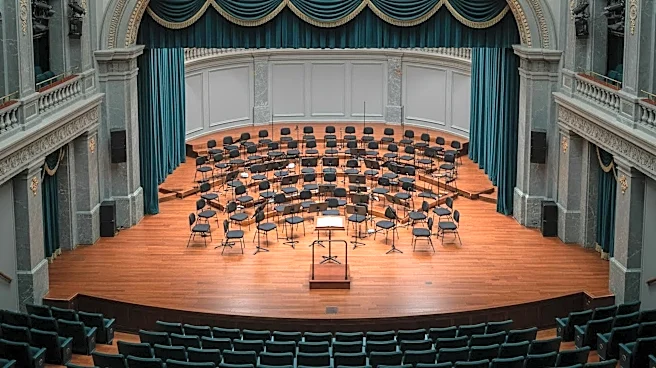
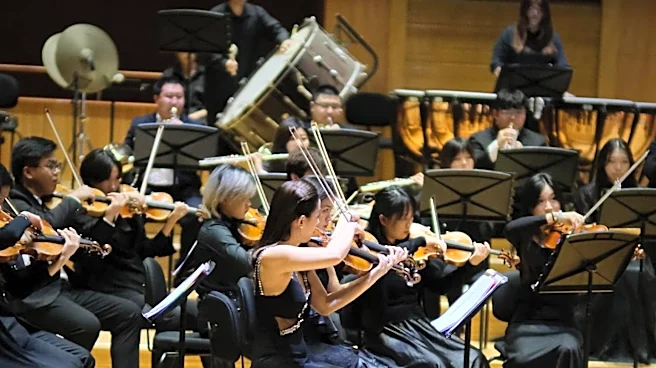
As the United States approaches its 250th anniversary, reflections on past celebrations, particularly the bicentennial in 1976, highlight the role of orchestras in national commemorations. During the bicentennial, significant funding from the National
Endowment for the Arts (NEA) enabled major orchestras to commission new works, celebrating American history and culture. Notable projects included John Cage's 'Renga' and 'Apartment House 1776,' which incorporated diverse American musical traditions. However, the current semiquincentennial lacks similar orchestral enthusiasm and funding, with fewer new commissions and performances. The NEA's 'America250' project exists but lacks the scale and impact of the 1976 initiatives.
Why It's Important?
The contrast between the 1976 bicentennial and the upcoming 250th anniversary underscores changes in cultural priorities and funding for the arts in the U.S. The bicentennial was marked by a robust investment in the arts, reflecting a national commitment to cultural expression and historical reflection. The current lack of similar initiatives may indicate shifting governmental and societal priorities, potentially impacting the role of orchestras and the arts in national identity. This shift could affect how future generations engage with and understand American history and culture.
What's Next?
As the 250th anniversary approaches, there may be opportunities for orchestras and cultural institutions to advocate for increased support and recognition. The NEA and other organizations might consider expanding their efforts to commission and promote new works that reflect contemporary American society. Additionally, orchestras could explore innovative ways to engage audiences and highlight diverse narratives, ensuring that the arts remain a vital part of national celebrations.