
What's Happening?
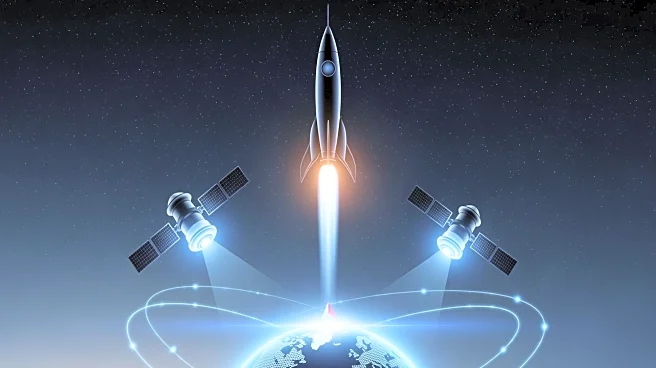
The Ariane 6 carrier rocket has successfully launched two Galileo navigation satellites, marking a significant advancement for the European navigation system. The launch occurred at the Guiana Space Centre
in French Guiana on December 17, 2025. These satellites are part of the European Space Agency's efforts to enhance the Galileo constellation, which currently includes 26 active satellites. Following the launch, the satellites will reach their designated orbit at an altitude of approximately 23,222 km after about 3 hours and 20 minutes. Over the next three days, the satellites will undergo solar panel deployment and system checks before entering a four-month positioning phase. This mission is the fifth recent launch of the Ariane 6, underscoring the European Space Agency's commitment to advancing its space capabilities.
Why It's Important?
The successful deployment of these satellites strengthens the Galileo system's role as a global navigation provider, offering more reliable and precise navigation services. This development is crucial for enhancing monitoring and communication capabilities within the European space program. The expansion of the Galileo constellation not only benefits European users but also provides global users with improved navigation accuracy. This launch highlights the European Space Agency's growing influence in the space industry and its ability to support autonomous space programs, which is vital for maintaining technological independence and competitiveness in the global space sector.