





What's Happening?
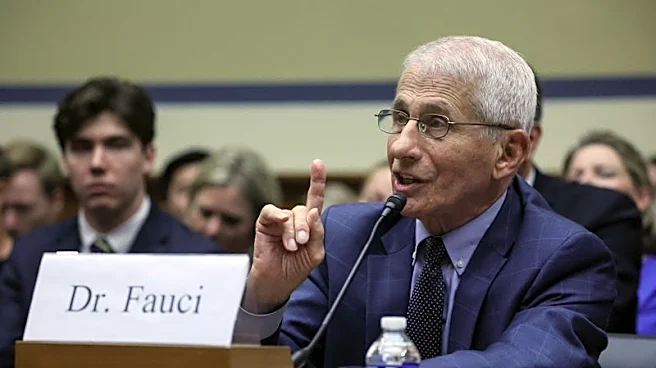
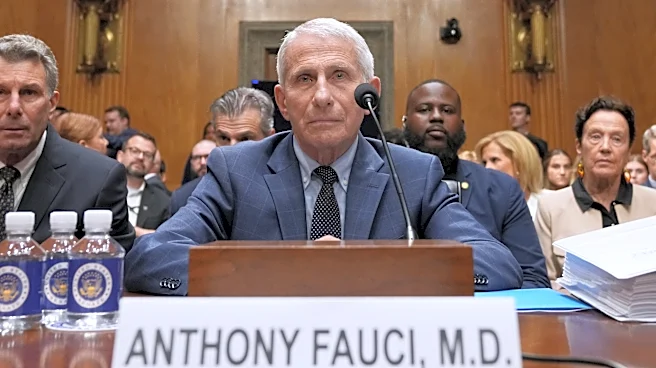
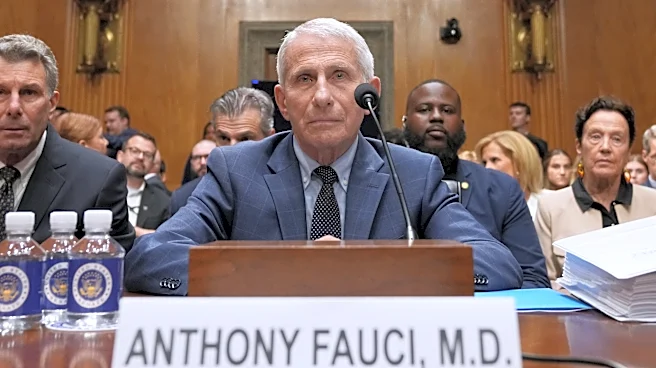
Senator Rand Paul has released diary entries purportedly written by Dr. Anthony Fauci, the former director of the National Institute of Allergy and Infectious Diseases, covering the period from December 2019 to December 2022. These documents have reignited
the debate over the origins of COVID-19, with Paul alleging discrepancies between Fauci's private notes and his public statements. The controversy centers on the 'lab leak' theory, which suggests that the virus may have originated from the Wuhan Institute of Virology, potentially involving gain-of-function research funded by the NIH. Fauci is set to testify in a Senate hearing, where these issues will be further explored.
Why It's Important?
The ongoing debate over the origins of COVID-19 has significant implications for public trust in science and government transparency. The allegations against Dr. Fauci and the NIH's involvement in gain-of-function research have fueled political tensions and could impact future funding and regulatory policies for scientific research. The outcome of this debate may influence how the U.S. prepares for and responds to future pandemics, as well as its diplomatic relations with China. The controversy also highlights the challenges of balancing scientific exploration with safety and ethical considerations.
What's Next?
Dr. Fauci's upcoming testimony before the Senate is expected to address the allegations made by Senator Paul and clarify his stance on the origins of COVID-19. The hearing may lead to further investigations or policy changes regarding gain-of-function research. Additionally, the U.S. Department of Health and Human Services has announced new oversight policies for such research, which could affect future scientific collaborations and funding. The scientific community and policymakers will likely continue to debate the origins of the virus and the appropriate level of oversight for high-risk research.
Beyond the Headlines
The controversy over the lab leak theory and gain-of-function research raises broader questions about the role of scientific transparency and accountability. It also underscores the importance of international cooperation in addressing global health threats. The debate may influence public perceptions of science and government, potentially affecting vaccine uptake and compliance with public health measures. Long-term, this issue could lead to shifts in how scientific research is conducted and communicated to the public, emphasizing the need for clear and consistent messaging.