






What's Happening?
U.S. Senators Mark Warner and Tim Kaine, both Democrats from Virginia, are actively supporting legislation aimed at assisting coal miners and their families, particularly in response to a resurgence of black lung disease cases in Appalachia. They have
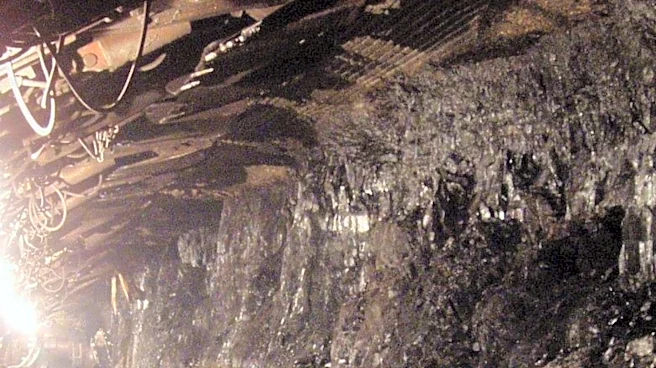
co-sponsored the Black Lung Benefits Improvement Act, designed to streamline the process for miners to receive financial benefits, and the Relief for Survivors of Miners Act, which seeks to provide support for surviving spouses. This legislative push comes as new research indicates that black lung disease among Appalachian coal miners has reached a nearly 50-year high, with a significant increase in cases among both experienced and younger miners. Advocates attribute this surge to inadequate enforcement of federal regulations and exposure to silica dust from deeper drilling operations. The Biden administration had proposed stricter safety standards, but these were delayed and subsequently challenged in court, with the Trump administration not defending the rule and seeking to block intervention from labor unions and the Black Lung Association.
Why It's Important?
The resurgence of black lung disease to near 50-year highs represents a critical public health and labor issue in the U.S., particularly in coal-mining regions like Appalachia. This disease, caused by exposure to coal and silica dust, is incurable and significantly impacts the quality of life and longevity of miners. The legislative efforts by Senators Warner and Kaine are vital for providing much-needed financial and medical support to affected miners and their families, who often face lengthy and challenging processes to obtain compensation. The debate over regulatory enforcement highlights a broader conflict between industry interests and worker safety. The lack of consistent and robust federal oversight, coupled with legal challenges to stricter safety standards, puts miners at continued risk. The involvement of both Democratic and Republican lawmakers, though with differing approaches, underscores the bipartisan recognition of the severity of the issue, even as political divisions impact the implementation of protective measures. The long-term health and economic well-being of these communities are at stake, making effective legislation and enforcement paramount.
What's Next?
The future of the Black Lung Benefits Improvement Act and the Relief for Survivors of Miners Act hinges on their passage through congressional chambers. While Democratic lawmakers in Appalachian states have championed these bills, bipartisan support will be crucial for their success. The ongoing legal challenges to the Biden-era safety rule, which aimed to lower exposure limits for miners, will also continue to shape the regulatory landscape. The Trump administration's review of a new coal dust rule, intended to replace the Biden administration's proposal, is another key development to watch, though its details have not yet been publicly unveiled. Advocates like Vonda Robinson of the National Black Lung Association are calling for increased public awareness and political action, including potential future demonstrations in Washington D.C., to pressure lawmakers. The continued advocacy by affected miners and their families, coupled with new research on the disease's prevalence, will likely maintain pressure on Congress to address this critical issue and ensure that regulations are not only passed but also effectively enforced.
Beyond the Headlines
The struggle against black lung disease in Appalachia reveals deeper societal and ethical questions about industrial responsibility, worker protection, and the long-term costs of energy production. The fact that younger miners are now contracting the disease underscores a systemic failure to adequately protect workers, raising concerns about corporate accountability and regulatory capture. The political maneuvering around safety regulations, particularly the Trump administration's actions regarding the Biden-era rule, highlights the complex interplay between economic policy, environmental concerns, and public health. Beyond the immediate legislative fixes, this situation calls for a re-evaluation of the social contract with workers in hazardous industries. It also brings to light the human cost of energy policies and the need for comprehensive support systems for communities historically reliant on industries like coal mining. The emotional toll on families, as described by Vonda Robinson, whose children may not see their parents graduate high school, emphasizes the profound human impact that extends far beyond economic statistics.