


What's Happening?
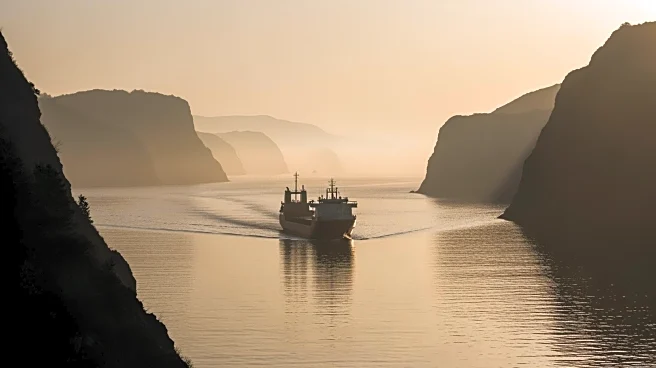
The ongoing conflict in Iran has significantly disrupted oil exports through the Strait of Hormuz, a critical passage for global oil and liquefied natural gas (LNG) shipments. This disruption has led to increased energy prices and has strained economies
that heavily rely on imported fuels. The impact is most pronounced in Asia, which is a major destination for these oil exports, but Europe and Africa are also experiencing economic pressures due to rising fuel costs. The situation underscores the vulnerability of countries dependent on fossil fuels and highlights the competitive edge of renewable energy sources, which have become more cost-effective than fossil fuels in many regions. Countries with substantial renewable energy infrastructure, such as China and India, are better insulated from these shocks, although they still face challenges in fully transitioning away from fossil fuels.
Why It's Important?
The disruption in oil exports due to the Iran conflict serves as a stark reminder of the fragility of global energy markets and the urgent need for a transition to renewable energy. Countries that have invested in renewable energy are less affected by such geopolitical tensions, as they rely on domestic resources like solar and wind power. This situation emphasizes the strategic importance of renewable energy in enhancing energy security and reducing dependency on volatile fossil fuel markets. The current crisis could accelerate the shift towards renewable energy, as nations seek to mitigate the risks associated with fossil fuel dependency. This transition is crucial not only for energy security but also for addressing climate change and reducing carbon emissions.
What's Next?
In response to the energy crisis, countries are likely to intensify their efforts to expand renewable energy infrastructure. Policymakers may prioritize investments in solar, wind, and other renewable sources to reduce reliance on imported fossil fuels. The situation may also prompt international cooperation to stabilize energy markets and support the transition to cleaner energy. Additionally, countries heavily impacted by the crisis, such as those in Africa and Asia, may seek financial and technical assistance to develop their renewable energy capabilities. The ongoing conflict and its impact on energy markets could serve as a catalyst for a more rapid global shift towards sustainable energy solutions.
Beyond the Headlines
The current energy crisis highlights deeper issues related to global energy dependency and the need for a more resilient and sustainable energy system. The reliance on fossil fuels not only poses economic risks but also has significant environmental and social implications. The transition to renewable energy is not just about energy security; it is also about creating a sustainable future that addresses climate change and promotes economic stability. The crisis underscores the importance of diversifying energy sources and investing in technologies that can provide long-term solutions to global energy challenges.