







What's Happening?
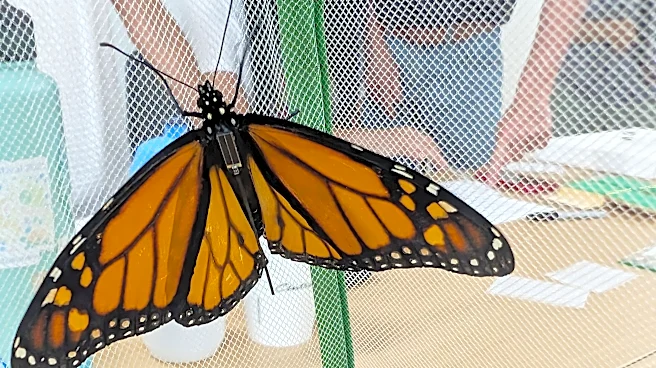
Scientists are attaching tiny tracking devices to hundreds of monarch butterflies to better understand their 3,000-mile migration journey across North America. These solar-powered radio tags, weighing as much as a drop of water, are providing unprecedented
data on the butterflies' routes, daily flight distances, and overnight resting spots. This research, led by scientists like Rebeca Quiñonez-Piñón of the National Wildlife Federation, aims to identify critical stopover locations that are vital for the monarchs' survival. The public can follow individual butterflies' progress through the 'Project Monarch Science' app. This initiative is crucial as monarch populations have significantly declined due to habitat loss, pesticide use, and climate change.
Why It's Important?
The use of tiny trackers to study monarch butterfly migration is critically important for conservation efforts in the U.S. and North America. Monarch populations have seen drastic declines, with eastern monarchs dropping over 80% and western monarchs about 95% since the mid-1990s. By pinpointing exact migration routes and stopover points, scientists can advocate for targeted habitat protection and restoration, such as planting milkweed and pollinator plants along roadsides and in gardens. This research directly informs policy and land management decisions, helping to mitigate threats from development, pesticides, and climate change. Protecting monarchs also benefits broader ecosystems, as they are key pollinators essential for plant life and food sources. The data gathered helps to understand the complex ecological needs of these insects, which are often overlooked despite their vital role.
What's Next?
The ongoing tracking efforts are expected to yield more comprehensive data on monarch migration patterns, which will be used to refine conservation strategies. Scientists will continue to analyze the information from the nearly 1,750 tagged monarchs to identify previously unknown connections between populations and critical habitats. This data will inform future conservation policies and land use planning, particularly in areas like the 'Texas funnel,' a narrow corridor through which many monarchs pass. The public's engagement through the 'Project Monarch Science' app will also continue to raise awareness and encourage community science participation. The long-term goal is to reverse the decline in monarch populations by ensuring the availability of necessary resources throughout their migratory path, potentially influencing future decisions on federal protections for the species.
Beyond the Headlines
The monarch butterfly tracking initiative highlights deeper implications regarding the intersection of technology, environmental conservation, and public engagement. The development of miniature, lightweight trackers represents a significant advancement in ecological research, allowing for non-invasive study of delicate species. This technology could be applied to other migratory insects and small animals, revolutionizing our understanding of their movements and ecological needs. Furthermore, the 'Project Monarch Science' app exemplifies the growing trend of citizen science, empowering the public to contribute directly to scientific research and conservation efforts. This fosters a sense of collective responsibility for environmental stewardship. The monarch, often seen as a symbol of international migration, also serves as a poignant reminder of the interconnectedness of ecosystems across national borders and the global impact of climate change and human activity on biodiversity.