







What's Happening?
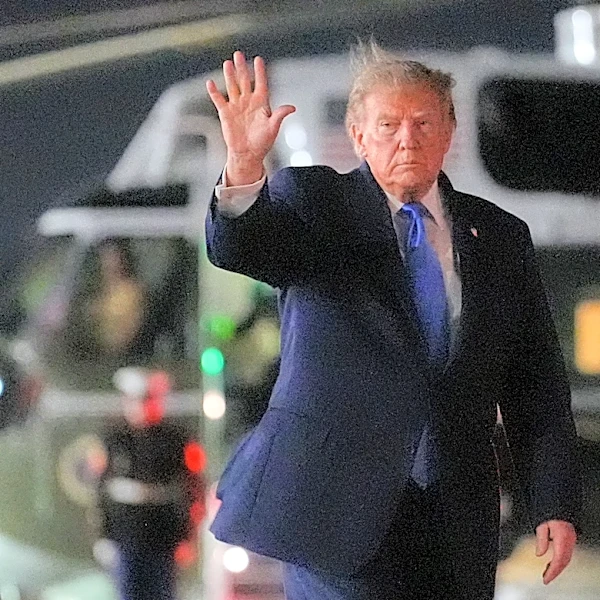
President Trump, in his address to the United Nations General Assembly, asserted that his administration had settled eight wars since he took office. Among the conflicts he listed as resolved were those between Cambodia and Thailand, Kosovo and Serbia,
Rwanda and the Democratic Republic of Congo, India and Pakistan, Armenia and Azerbaijan, and the war in Gaza. He also previously claimed to have ended a brief conflict between Israel and Iran and a supposed war between Egypt and Ethiopia. However, a fact check by CNN indicates that this figure is a clear exaggeration. The situations between Egypt and Ethiopia, and Kosovo and Serbia, were diplomatic disputes, not active wars during his tenure. Furthermore, the war involving Rwanda and the Democratic Republic of Congo has not ended, and Israel continues to conduct attacks in Gaza despite a US-brokered ceasefire. While President Trump did contribute to ending a brief 2025 conflict between Israel and Iran, Israel subsequently engaged in another war against Iran in 2026.
Why It's Important?
President Trump's claims regarding the resolution of international conflicts, particularly those that were not active wars or remain ongoing, have significant implications for international diplomacy and public perception. Misrepresenting the status of global conflicts can undermine the credibility of U.S. foreign policy and create a distorted view of international stability. For regions like Kosovo and Serbia, where tensions remain, falsely declaring a resolution could be seen as downplaying complex geopolitical realities and potentially impacting ongoing peace efforts. The discrepancy between official statements and factual assessments can also affect the trust placed in information from the White House, influencing how other nations and international bodies perceive U.S. engagement in global affairs. This situation highlights the importance of accurate reporting and fact-checking in an era where information dissemination is rapid and widespread, especially concerning sensitive international relations.
What's Next?
The ongoing scrutiny of President Trump's statements by media outlets and international observers is likely to continue, particularly as his administration's foreign policy record is evaluated. The international community, including the United Nations and the nations directly involved in the mentioned conflicts, may continue to address the actual status of these disputes, potentially issuing their own clarifications or continuing diplomatic efforts. For the U.S., maintaining credibility on the global stage will depend on aligning official narratives with verifiable facts. Future diplomatic engagements and peace initiatives will likely proceed based on the actual conditions on the ground, rather than on unsubstantiated claims of resolution. The emphasis on fact-checking will remain crucial for informing both domestic and international audiences about the true state of global affairs and the effectiveness of diplomatic interventions.
Beyond the Headlines
The repeated assertion of false or exaggerated claims by a U.S. President at an international forum like the United Nations General Assembly raises deeper questions about the nature of political discourse and the erosion of factual integrity in public statements. This trend can contribute to a post-truth environment where objective facts are less influential than appeals to emotion or personal belief. Such rhetoric can also have a corrosive effect on international relations, as other nations may become more skeptical of U.S. pronouncements, potentially hindering collaborative efforts on critical global issues. The incident underscores the challenge of distinguishing between political messaging and verifiable reality, and the responsibility of leaders to uphold accuracy in their public addresses, especially when discussing matters of war and peace that affect millions of lives globally.