



What's Happening?
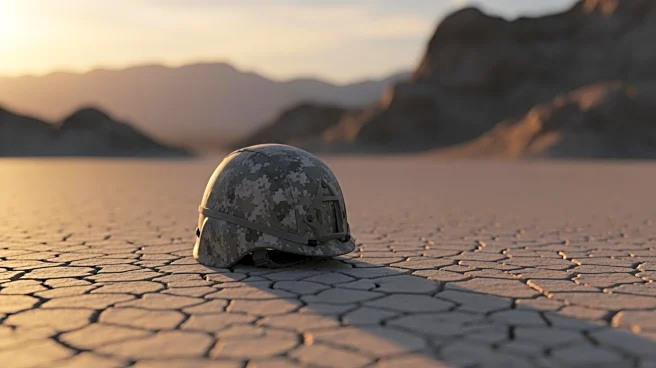
Two U.S. service members and one American civilian interpreter were killed in an ambush by a suspected Islamic State (ISIS) gunman near Palmyra, Syria. The U.S. military's Central Command confirmed the attack, which also resulted in injuries to three
other U.S. servicemembers and Syrian security personnel. The wounded were evacuated to the Al-Tanf garrison for medical treatment. The attacker, who opened fire near a checkpoint, was engaged and killed during the incident. This attack occurred during a 'key leadership engagement,' highlighting the complex security environment in Syria following the ouster of President Bashar al-Assad in 2024. Despite ISIS's territorial defeat, the group continues to exploit political fragmentation and weakened governance to carry out attacks.
Why It's Important?
The attack underscores the persistent threat posed by ISIS and similar extremist groups in Syria, even after their territorial defeat. It marks one of the deadliest attacks on U.S. personnel in the region in recent years and highlights the ongoing volatility in Syria's security landscape. The incident also reflects the challenges faced by U.S. forces in stabilizing areas liberated from ISIS influence. The broader regional dynamics are shifting, with Syria's improving relations with Western governments and its participation in coalitions against ISIS. This attack may influence U.S. military posture and counterterrorism strategies in the region, as extremist threats continue to shape security policies.
What's Next?
The U.S. military is likely to reassess its security protocols and engagement strategies in Syria following this attack. There may be increased scrutiny of local security forces and their affiliations, as well as a potential reevaluation of partnerships with Syrian authorities. The incident could lead to heightened military operations against ISIS remnants in the region. Additionally, the U.S. may seek to strengthen international cooperation and intelligence-sharing to prevent future attacks. The evolving political landscape in Syria, with new leadership and alliances, will also play a crucial role in shaping future U.S. involvement and strategy in the region.