








What's Happening?
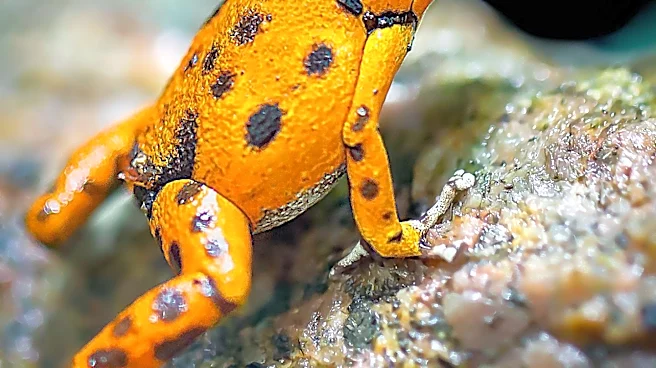
The desert rain frog, native to the north-west coast of South Africa and south-western Namibia, is facing a threat of extinction. The International Union for Conservation of Nature (IUCN) has classified the species as vulnerable, predicting a 20% population
decline in the next decade without conservation efforts. The frog's habitat is under threat from diamond mining and development projects, such as the Boegoebaai port and rail project, which could affect a significant portion of its range. Additionally, increased urbanization poses a threat to its survival. The frog's unique squeak has gained popularity on social media, raising concerns about its potential targeting for the pet trade.
Why It's Important?
The potential extinction of the desert rain frog highlights the broader issue of habitat destruction and its impact on biodiversity. As development projects expand, they threaten not only the frog but also other species that rely on the same environment. The frog's popularity on social media could lead to increased demand in the pet trade, further endangering its population. Conservationists emphasize the importance of preserving the frog's natural habitat, as recreating its living conditions in captivity is challenging. The situation underscores the need for sustainable development practices that consider environmental impacts.
What's Next?
Conservationists are advocating for measures to protect the desert rain frog's habitat, emphasizing the importance of maintaining the sand dunes where the frog thrives. Efforts may include lobbying for stricter regulations on development projects and raising awareness about the frog's ecological significance. Additionally, monitoring the pet trade for illegal activities involving the frog could be crucial in preventing further population decline. Collaboration between environmental organizations and government agencies may be necessary to implement effective conservation strategies.
Beyond the Headlines
The desert rain frog's plight reflects broader environmental challenges faced by many species due to human activities. The frog's unique adaptations to its harsh environment highlight the importance of preserving diverse ecosystems. The situation raises ethical questions about the impact of social media on wildlife, as viral content can inadvertently contribute to species endangerment. Long-term conservation efforts may require a shift in public perception and increased support for sustainable practices.