


What's Happening?
For the second year in a row, the Antarctic krill fishery has closed prematurely after reaching its catch limit. This closure, while demonstrating adherence to existing regulations, has prompted questions regarding the sufficiency of current conservation
rules in the face of a rapidly changing Southern Ocean. Antarctica2030 Chair José María Figueres, a former President of Costa Rica, emphasized in an op-ed that protecting healthy ocean ecosystems is crucial for future economic opportunities. The concentration of krill fishing around the Antarctic Peninsula, coupled with climate change impacting krill habitats and the ongoing proposal for an Antarctic Peninsula Marine Protected Area, highlights the urgent need for stronger, ecosystem-based management. Norway, a key player in the krill fishery, is specifically called upon to lead these conservation efforts.
Why It's Important?
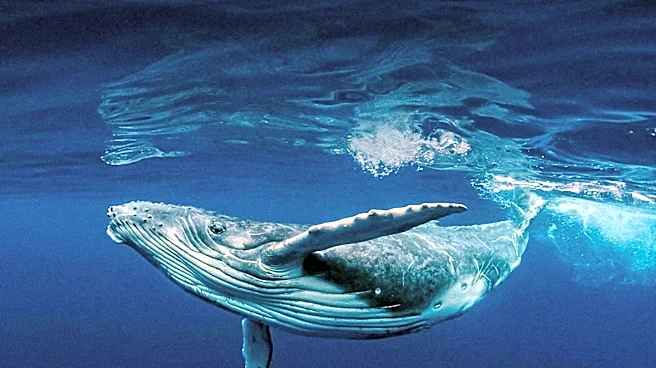
The early closure of the Antarctic krill fishery carries significant implications for marine ecosystems and global conservation efforts. Krill are a foundational species in the Antarctic food web, serving as a primary food source for whales, seals, penguins, and other marine life. Their depletion could have cascading effects throughout the ecosystem, impacting biodiversity and the health of the Southern Ocean. The increasing concentration of fishing activity in specific areas, combined with the effects of climate change on krill habitats, creates a critical vulnerability. This situation underscores the broader challenge of balancing economic interests with environmental sustainability in a rapidly changing climate. The call for Norway to take a leadership role reflects the international community's expectation for nations with significant involvement in such industries to champion robust conservation measures, potentially setting a precedent for other fisheries worldwide.
What's Next?
The ongoing discussions within international bodies like the Convention for the Conservation of Antarctic Marine Living Resources (CCAMLR) are expected to intensify, focusing on the development and implementation of more robust, ecosystem-based management strategies for the krill fishery. This will likely involve re-evaluating catch limits, considering spatial and temporal restrictions on fishing, and potentially establishing new marine protected areas, such as the proposed Antarctic Peninsula Marine Protected Area. The role of nations like Norway will be critical in advocating for and adopting these stricter measures. Future actions will aim to ensure that krill harvesting is conducted in a manner that accounts for the broader ecological impacts and the accelerating effects of climate change on the Southern Ocean's delicate balance.
Beyond the Headlines
The recurring early closure of the krill fishery points to a deeper ethical and environmental dilemma: whether current regulatory frameworks are truly adequate for safeguarding vulnerable ecosystems in an era of unprecedented climate change. This situation highlights the tension between short-term economic gains from resource extraction and the long-term health of global marine environments. It also brings to the forefront the concept of 'ecosystem-based management,' which moves beyond single-species management to consider the entire ecosystem and its interconnectedness. The debate around krill fishing in the Antarctic serves as a microcosm for broader global challenges in ocean governance, emphasizing the need for proactive, adaptive, and internationally coordinated conservation strategies to prevent irreversible ecological damage and ensure the sustainability of marine resources for future generations.