
What's Happening?
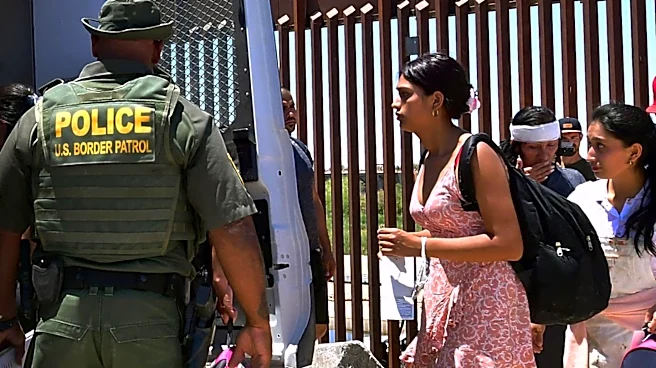
U.S. Immigration and Customs Enforcement (ICE) has significantly increased its immigration arrests, reaching a record high of over 43,000 in June 2026, the highest under President Trump's administration.
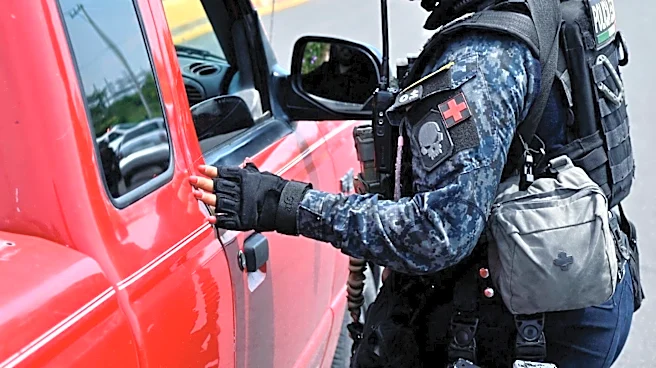
This surge in arrests is part of a broader effort to detain and deport immigrants, with daily arrest numbers peaking at 1,593 in early July. Despite the administration's focus on detaining individuals with criminal convictions, less than a third of those detained have such records, and 40% have no criminal record, being held for non-criminal immigration violations. The Department of Homeland Security has emphasized its commitment to arresting individuals with serious criminal backgrounds, although the statistics show a different picture. The enforcement operations have led to fatal incidents, including the shooting deaths of two immigrants during traffic stops in Texas and Maine. In response to these incidents, ICE officers are now required to wear body cameras during traffic stops.
Why It's Important?
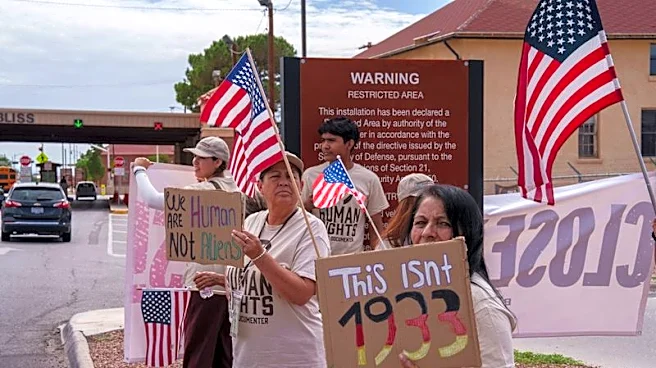
The increase in immigration arrests highlights the Trump administration's aggressive stance on immigration enforcement, which has sparked significant controversy and debate. The focus on detaining individuals without criminal records raises concerns about the fairness and effectiveness of the immigration system. The fatalities during enforcement operations have intensified calls for greater accountability and transparency in ICE's practices. The policy has also faced legal challenges, with federal judges, including some appointed by President Trump, ruling against mandatory detention policies. The U.S. Supreme Court is expected to address the legality of these policies in its upcoming term, which could have significant implications for immigration enforcement and the rights of immigrants in the U.S.
What's Next?
The continuation of aggressive immigration enforcement is likely to face further legal and public scrutiny. The U.S. Supreme Court's upcoming decision on the legality of mandatory detention policies will be pivotal in shaping future enforcement practices. Additionally, the use of body cameras by ICE officers during traffic stops may be a step towards increased transparency, but it remains to be seen how this will impact public perception and the agency's operations. The administration's policies may also influence the political landscape, as immigration remains a contentious issue in U.S. politics.