
What's Happening?
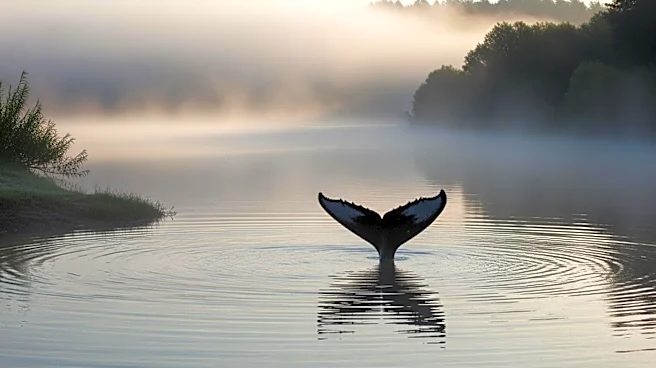
A juvenile gray whale was discovered dead in the Willapa River near Raymond, Washington, after swimming 20 miles upstream. This unusual event has drawn attention to the broader issue of declining gray whale populations
in the eastern Pacific Ocean. According to John Calambokidis, a research biologist with the Cascadia Research Collective, the whale's journey may have been driven by hunger as the species faces reduced food availability in their traditional feeding grounds in the northern Bering and Chukchi seas. The National Oceanic and Atmospheric Administration (NOAA) Fisheries agency has declared an unusual mortality event for eastern gray whales from late 2018 to late 2023, with 690 strandings reported. The population, once thought to be rebounding, has continued to decline, with the latest count in 2025 showing only about 13,000 gray whales, the lowest since the 1970s.
Why It's Important?
The death of the gray whale highlights the ongoing crisis facing the species, which is crucial for maintaining the ecological balance in their marine habitats. The decline in gray whale populations is attributed to changes in their Arctic feeding areas, leading to malnutrition and increased mortality. This situation underscores the broader environmental challenges posed by climate change and ecosystem disruptions. The decline in gray whale numbers could have cascading effects on marine ecosystems, as these whales play a vital role in nutrient cycling and ocean health. The situation also raises concerns about the effectiveness of current conservation efforts and the need for more robust measures to protect marine life in the face of changing environmental conditions.
What's Next?
Researchers from the Cascadia Research Collective plan to examine the deceased whale to gather more information about its condition and the factors contributing to its death. This investigation could provide insights into the broader challenges facing gray whales and inform future conservation strategies. Additionally, there may be increased calls for international cooperation to address the environmental changes affecting the whales' feeding grounds. Policymakers and environmental organizations might push for more comprehensive measures to mitigate the impacts of climate change on marine ecosystems, ensuring the survival of gray whales and other vulnerable species.
Beyond the Headlines
The plight of the gray whale serves as a stark reminder of the interconnectedness of global ecosystems and the far-reaching impacts of environmental changes. The situation raises ethical questions about humanity's responsibility to protect endangered species and preserve biodiversity. It also highlights the need for a more sustainable approach to managing natural resources and addressing climate change. As public awareness of these issues grows, there may be increased pressure on governments and industries to adopt more environmentally friendly practices and policies.