



What's Happening?
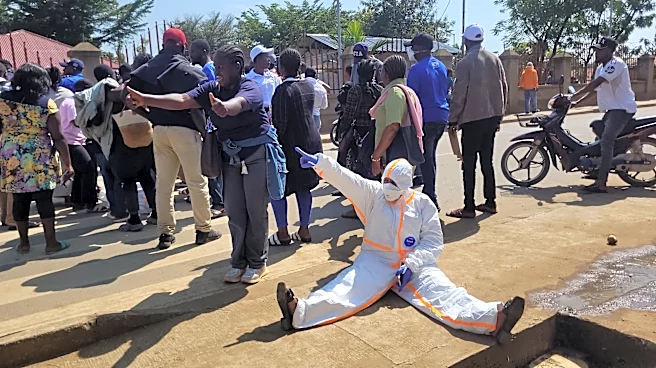
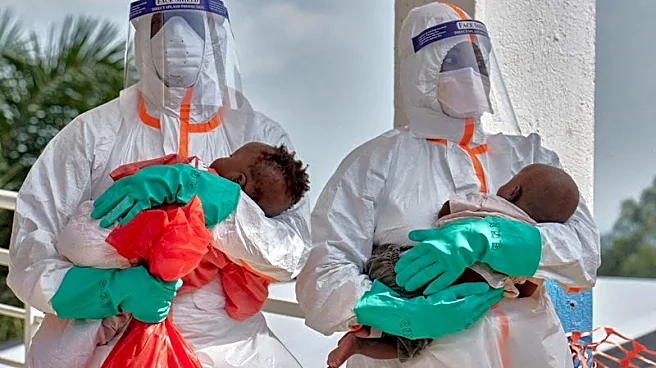
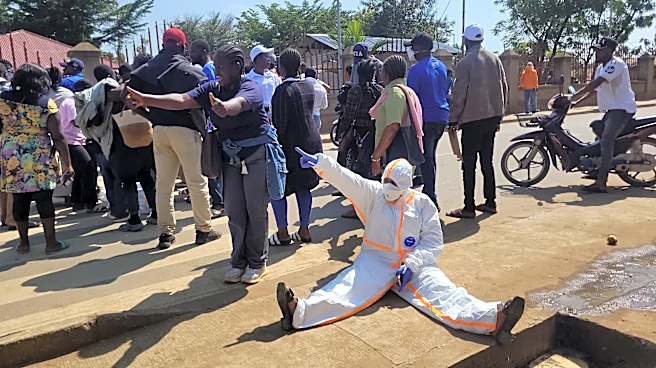
The Ebola virus has reached displacement camps in the Democratic Republic of Congo (DRC), exacerbating an already severe outbreak. According to the United Nations High Commissioner for Refugees (UNHCR), the virus has infected 19 internally displaced people,
resulting in five deaths. The outbreak, which began in May, has seen nearly 4,000 cases and over 1,800 deaths, primarily in the Ituri province. The World Health Organization (WHO) has called for an urgent scale-up of response efforts, as the virus poses a significant threat to the 4.4 million internally displaced people in the affected provinces. The outbreak overlaps with regions heavily impacted by ongoing conflict, complicating containment efforts.
Why It's Important?
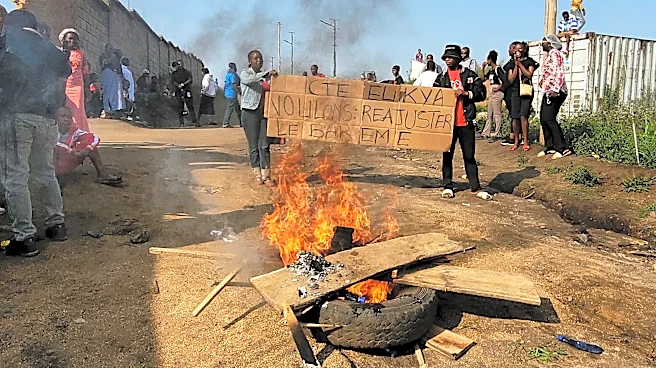
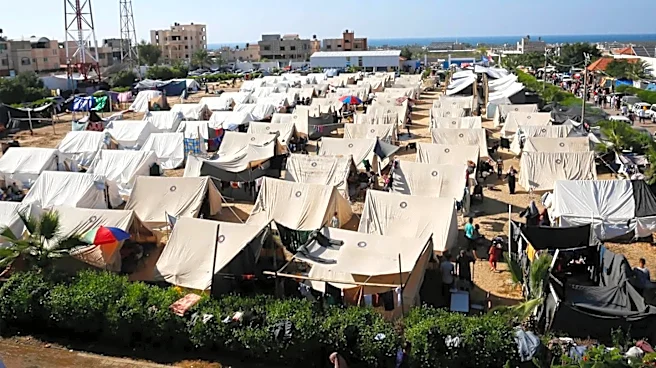
The spread of Ebola to displacement camps in the DRC underscores the challenges of managing public health crises in conflict zones. The camps, lacking adequate water and sanitation infrastructure, provide fertile ground for the virus to spread. The situation is further complicated by the distrust of health services among the displaced populations. The outbreak's escalation threatens to overwhelm local and international response efforts, potentially leading to a wider regional health crisis. The international community's ability to contain the virus will be a critical test of global health response mechanisms and could have significant implications for future outbreaks.
What's Next?
The UN and its partners are intensifying efforts to contain the outbreak, including enhancing surveillance, laboratory testing, and treatment facilities. WHO Director-General Tedros Adhanom Ghebreyesus has emphasized the need for strengthened coordination with the DRC government and increased protection for health workers. The UN has allocated $60 million from its Central Emergency Response Fund to support these efforts. However, the ongoing conflict and the presence of multiple armed groups in the region pose significant challenges to these initiatives. The success of containment efforts will depend on the ability to secure health facilities and gain the trust of local communities.