

What's Happening?
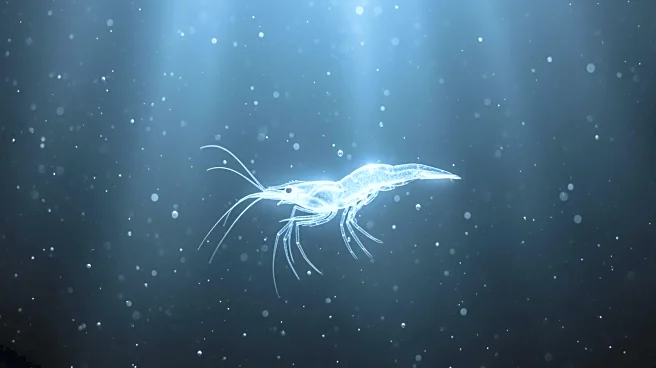
Norwegian company Aker QRILL, the world's largest krill harvester, is at the center of a dispute over its 'blue tick' sustainability label. Environmental groups, including the Antarctic and Southern Ocean Coalition (Asoc) and WWF, have raised concerns
about the impact of krill fishing on Antarctica's ecosystem. They argue that the management of the krill fishery has deteriorated due to lapsed conservation measures, exacerbated by political deadlock within the Commission for the Conservation of Antarctic Marine Living Resources (CCAMLR). These groups are calling for a moratorium on krill fishing and a review of the Marine Stewardship Council's (MSC) sustainability certification. Aker QRILL is undergoing a new evaluation for its certification, with environmentalists objecting to its recertification due to the potential ecological impact.
Why It's Important?
The controversy highlights the tension between commercial interests and environmental conservation in fragile ecosystems like Antarctica. Krill are a keystone species, crucial for the survival of many marine animals, including whales and penguins. The outcome of this dispute could influence future conservation policies and the sustainability standards applied to fisheries worldwide. If stricter measures are implemented, it could lead to more sustainable fishing practices, protecting biodiversity and mitigating climate change impacts. Conversely, failure to address these concerns could result in further ecological degradation, affecting global marine ecosystems and the industries dependent on them.
What's Next?
The ongoing evaluation of Aker QRILL's sustainability certification by a third-party assessor will determine whether the company can retain its 'blue tick' label. Environmental groups have submitted formal objections, which will be reviewed by an independent adjudicator. The decision could set a precedent for how sustainability certifications are awarded and challenged in the future. Additionally, Aker QRILL's efforts to engage with CCAMLR and other stakeholders may influence the development of new conservation measures. The resolution of this issue will be closely watched by environmentalists, policymakers, and the fishing industry, as it could impact international conservation efforts and the future of krill fishing in Antarctica.