







What's Happening?
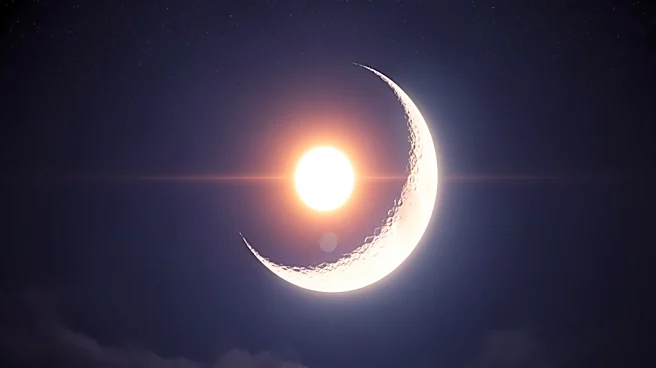
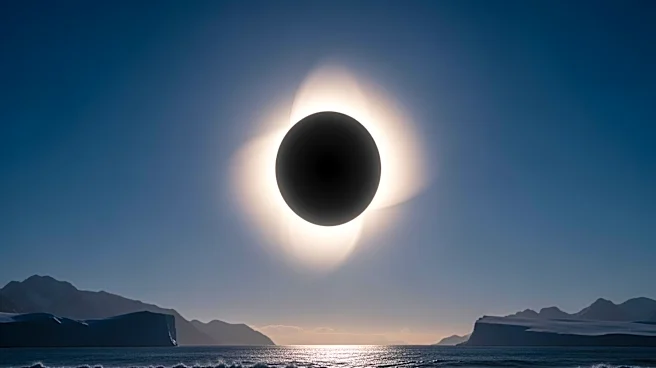
A total solar eclipse is set to occur on August 12, 2026, with the moon's shadow passing over Greenland, Iceland, and Spain. This celestial event will last up to 2 minutes and 18 seconds, turning day into twilight and revealing the sun's corona. It will be
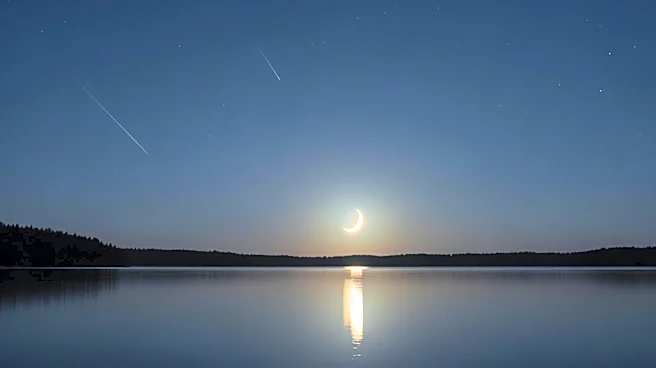
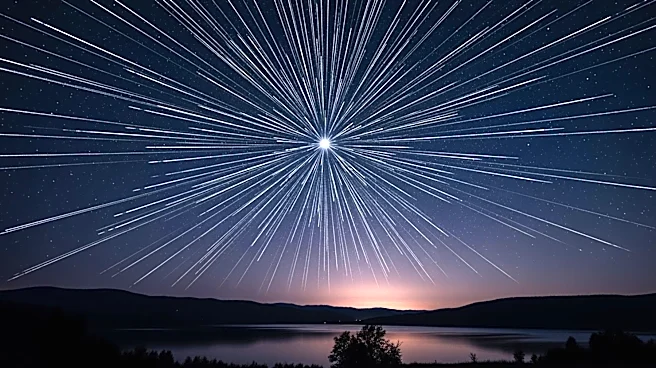
the first total solar eclipse visible from mainland Europe since 1999. The eclipse coincides with the peak of the Perseids meteor shower, offering a unique opportunity for skywatchers. In Spain, the eclipse will occur just before sunset, providing dramatic viewing conditions. The event is expected to attract eclipse chasers and tourists to the regions along the path of totality.
Why It's Important?
Total solar eclipses are rare and spectacular events that draw significant public interest and tourism. The 2026 eclipse presents an opportunity for scientific observation and public engagement with astronomy. It also has economic implications for the regions along the path of totality, as they prepare to accommodate an influx of visitors. The event highlights the importance of public education on safe viewing practices to prevent eye damage. Additionally, the eclipse offers a chance to promote awareness of astronomical phenomena and inspire interest in science and space exploration.
What's Next?
As the eclipse approaches, preparations are underway in Greenland, Iceland, and Spain to host visitors and ensure safe viewing experiences. Local authorities and tourism boards are likely to organize events and provide resources for eclipse watchers. Scientists and astronomers will use the opportunity to conduct research on the sun's corona and other celestial phenomena. Public education campaigns will emphasize the importance of using proper eye protection during the eclipse. The event will also be a test of infrastructure and emergency services in handling large crowds and ensuring public safety.