


What's Happening?
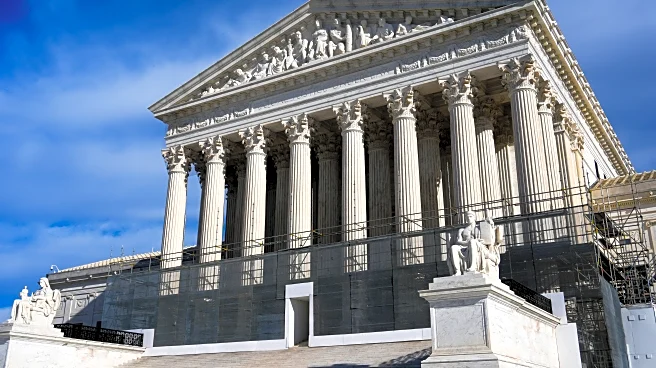
The U.S. Supreme Court has overturned a significant portion of the Trump administration's global tariff policies, prompting a swift response from international governments and businesses. The decision affects various trading relationships established
since President Trump returned to office 13 months ago. In response, President Trump announced a new executive order imposing a 10% tariff on certain imports, which he plans to increase to 15%. This development has led to emergency meetings in countries like South Korea, where officials are assessing the impact on exports such as automobiles and steel. French President Emmanuel Macron praised the U.S. system of checks and balances but warned against complacency. Meanwhile, businesses in Mexico and other regions are analyzing the potential effects on their operations, particularly those reliant on exports to the U.S.
Why It's Important?
The Supreme Court's decision to overturn parts of the Trump administration's tariff policy has significant implications for international trade and economic relations. The ruling introduces uncertainty for global businesses, which have already been navigating a volatile trade environment under President Trump's policies. Countries like Mexico, heavily reliant on exports to the U.S., face potential economic disruptions. The decision also highlights the importance of legal and institutional checks in shaping U.S. trade policy. For U.S. importers, the ruling opens the possibility of seeking refunds for excess tariffs paid, although this process is expected to be complex. The broader impact on global supply chains and economic stability remains a critical concern for international stakeholders.
What's Next?
In the wake of the Supreme Court's decision, countries and businesses are preparing for potential new tariffs and trade negotiations. Mexico's Economy Secretary Marcelo Ebrard plans to visit the U.S. to discuss economic implications, while European companies are considering seeking refunds for overpaid tariffs. The situation remains fluid, with President Trump's new tariff plans likely to prompt further international responses. Businesses are bracing for continued uncertainty, as they attempt to adapt to changing trade rules and potential economic impacts. The outcome of these developments will depend on future U.S. policy decisions and international diplomatic efforts to stabilize trade relations.