





What's Happening?
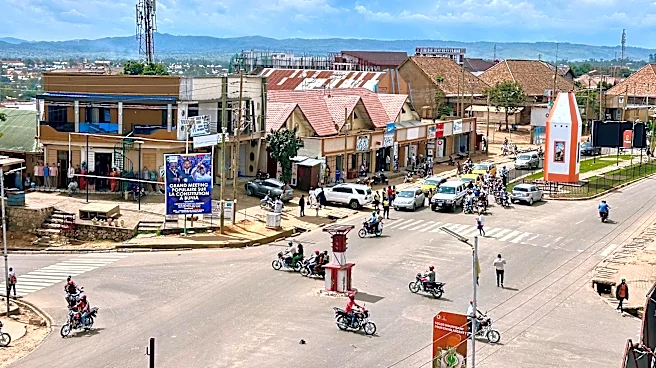
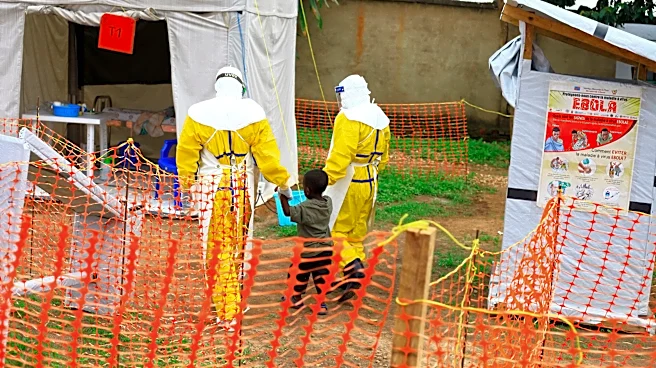
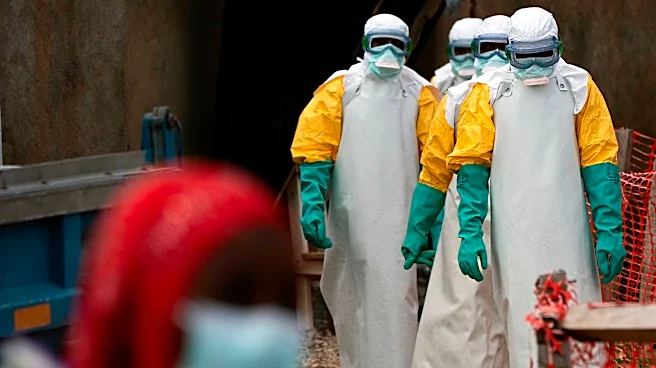
A new Ebola outbreak in the Democratic Republic of Congo's Ituri province has resulted in 87 deaths and 336 suspected cases. The outbreak is centered in the mining towns of Mongwalu and Rwampara, where the virus has spread rapidly due to the high mobility
of the population. The virus strain, identified as Bundibugyo, currently has no licensed vaccine, complicating containment efforts. The Africa Centres for Disease Control and Prevention is coordinating a regional response with international partners. The outbreak, which began in late April, has also led to the first confirmed death in Uganda, raising concerns about cross-border transmission.
Why It's Important?
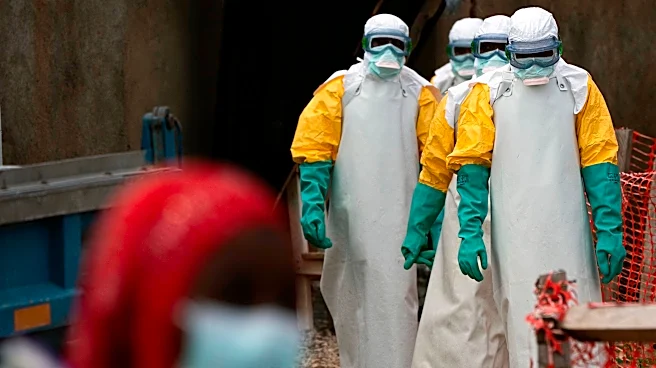
The outbreak poses a significant public health challenge due to the lack of a vaccine for the Bundibugyo strain of Ebola. The high number of suspected cases and the virus's spread to Uganda highlight the potential for a wider regional crisis. The situation underscores the vulnerability of the affected regions and the need for robust international support to contain the virus. The outbreak could strain healthcare systems in the region and necessitate increased funding and resources for protective equipment and medical care. The potential for further spread could impact regional stability and economic activities, particularly in the mining sector.
What's Next?
Efforts are underway to reinforce cross-border surveillance and preparedness. Health officials are working to trace contacts and contain the virus's spread. The development of an experimental vaccine is ongoing, though it has only shown limited efficacy in animal trials. International partners are likely to increase support for outbreak response efforts. The situation will require close monitoring to prevent further cross-border transmission and to manage the public health impact effectively.