







What's Happening?
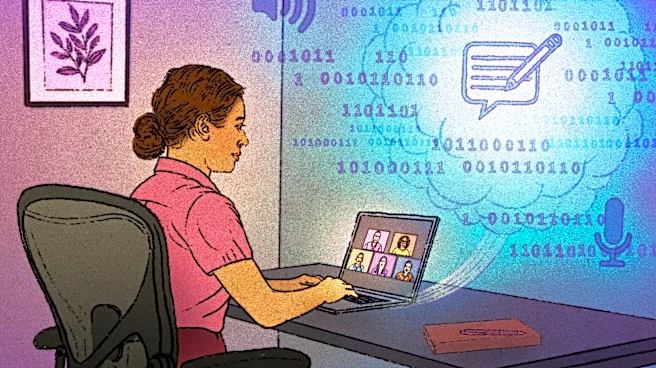
AI notetakers, which use artificial intelligence to record and summarize meetings, are facing scrutiny over privacy concerns related to biometric data. In Illinois, voiceprints are regulated under the Biometric Information Privacy Act, requiring consent
and data retention policies. However, many companies using AI notetakers lack these safeguards. Privacy advocates worry that voiceprints, which can be used to access confidential information, are being created without consent. The technology's ability to store and potentially misuse sensitive data, such as corporate strategies and personal information, has led to calls for stricter regulations and transparency in data handling practices.
Why It's Important?
The use of AI notetakers highlights significant privacy and security challenges in the digital age. As these tools become more prevalent, the potential for misuse of biometric data, such as voiceprints, increases. This poses risks of identity theft and unauthorized access to sensitive information. The situation underscores the need for robust legal frameworks to protect individuals' privacy rights and ensure companies adhere to strict data protection standards. The outcome of this scrutiny could influence future regulations on AI technologies and impact how businesses handle biometric data, affecting industries reliant on secure communication and data management.
What's Next?
As concerns grow, companies may face increased pressure to implement comprehensive data protection measures and obtain explicit consent from users. Legal challenges could arise, prompting lawmakers to revisit and potentially strengthen existing privacy laws. Businesses using AI notetakers might need to reassess their data handling practices to comply with regulations and maintain consumer trust. The ongoing debate could lead to broader discussions on the ethical use of AI in workplace settings, influencing future technological developments and privacy policies.