



What's Happening?
A grassroots civic group, the Lower Lackawanna Valley Citizens Alliance, is organizing a public forum to oppose a proposed project to reclaim Old Forge borehole mine water. The project, spearheaded by Renewable Energy Aggregators Inc., aims to divert
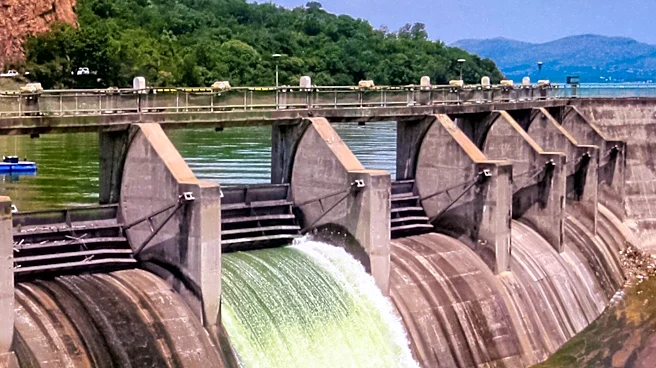
and purify polluted borehole water, returning clean water to the Lackawanna River and generating hydroelectric power. This plan involves constructing two large reservoirs and a treatment/power plant facility across a 1,300-acre area in Old Forge, Ransom Township, and Duryea, with a permit application currently pending before the Federal Energy Regulatory Commission (FERC). Concurrently, a different developer, Mudiita Land Venture LLC, plans to build a massive 'hyperscale' data center campus on part of the same land in Ransom Township, near the Old Forge border.
Why It's Important?
This situation highlights a significant conflict between environmental reclamation efforts, energy production, and large-scale industrial development in a single geographic area. The proposed borehole project, while aiming to clean polluted water and generate hydroelectric power, is facing opposition due to concerns about its environmental and health impacts on local communities. The simultaneous plan for a data center on adjacent land further complicates the issue, raising questions about land use, resource allocation, and the cumulative impact of multiple large-scale projects. The fact that the hydroelectric plant's nearly 200-megawatt generation capacity is not expected to go back to the grid but instead to an 'undisclosed location' (which the civic group suspects is the data center) adds to public scrutiny and concerns about transparency and local benefit.
What's Next?
The Lower Lackawanna Valley Citizens Alliance will host a public forum to inform community members about the proposed projects and their potential environmental and health impacts. This event is intended to mobilize local opposition and pressure regulatory bodies, including FERC, to scrutinize the permit application more closely. The outcome of FERC's review of the permit application will be crucial, as will the community's ability to influence local zoning and development decisions related to both the borehole project and the data center. The developers will likely need to address public concerns and demonstrate the projects' benefits and mitigation strategies to gain approval and community acceptance.
Beyond the Headlines
This case delves into the complex intersection of environmental justice, economic development, and community autonomy. It raises questions about who benefits from such projects and who bears the environmental and social costs. The potential for a large data center to consume the power generated by a hydroelectric plant, rather than feeding it into the public grid, highlights issues of energy equity and the prioritization of corporate interests over broader public utility. The situation also underscores the challenges faced by local communities in navigating complex regulatory processes and advocating for their interests against powerful corporate and governmental entities. It reflects a growing trend where the demand for digital infrastructure (like data centers) can compete with or complicate traditional energy and environmental initiatives.