








What's Happening?
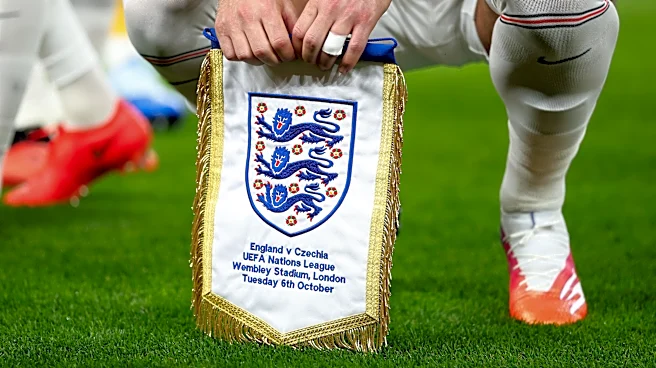
England is officially recognized as a country, possessing its own flag and national teams, despite not being an independent state. It is one of four countries that constitute the United Kingdom, alongside Scotland, Wales, and Northern Ireland. The UK,
as a sovereign state, handles international affairs such as issuing passports, signing treaties, and holding a permanent seat on the UN Security Council. England became a unified kingdom in the tenth century, predating the formation of the UK. While England does not have its own passport, army, or United Nations seat, it is a distinct entity within the larger sovereign state. Approximately 85% of the UK's 69.5 million people reside in England. Travel between the four countries of the UK does not require passport checks, and they all share the same currency, the pound sterling.
Why It's Important?
This clarification is important for understanding the political and geographical structure of the United Kingdom, particularly for international relations and travel. For U.S. citizens traveling to the UK, it means that a single entry permission, such as an Electronic Travel Authorisation (ETA), covers all four countries. This simplifies travel logistics and economic interactions within the region. The distinction also highlights the unique cultural and historical identities of each country within the UK, even as they operate under a unified sovereign government. Misconceptions about England's status as an independent nation versus a constituent country of the UK can impact diplomatic understanding and public perception, making this clarification crucial for accurate global awareness.
What's Next?
For travelers, the current system of a single entry permission and shared currency across the UK is expected to continue, simplifying visits to England, Scotland, Wales, and Northern Ireland. The UK government will maintain its role as the sovereign entity responsible for international agreements and security. Domestically, the distinct identities and governance structures of the four countries, such as the Scottish Parliament and Welsh Senedd, will likely persist, managing local affairs like schools and hospitals. The ongoing relationship between England and the other constituent countries will continue to evolve within the framework of the United Kingdom, with no immediate changes to their fundamental status anticipated.
Beyond the Headlines
The nuanced relationship between England as a country and the UK as a sovereign state reflects a complex historical evolution. This arrangement allows for both national identity and unified governance, a model that has implications for discussions on regional autonomy versus national unity in other parts of the world. The shared currency and lack of internal border checks foster economic integration and ease of movement, contributing to a cohesive internal market. However, the existence of separate national teams in sports, such as football, underscores the enduring cultural distinctions and national pride that coexist within the broader UK identity. This balance between unity and distinctiveness is a key characteristic of the United Kingdom's political and social fabric.