

What's Happening?
A calamitous nationwide ground stop last week severely disrupted U.S. air travel, with its follow-on effects gradually easing. The incident, which caused a roughly five-hour ground stop, has been preliminarily linked to a router upgrade performed by defense
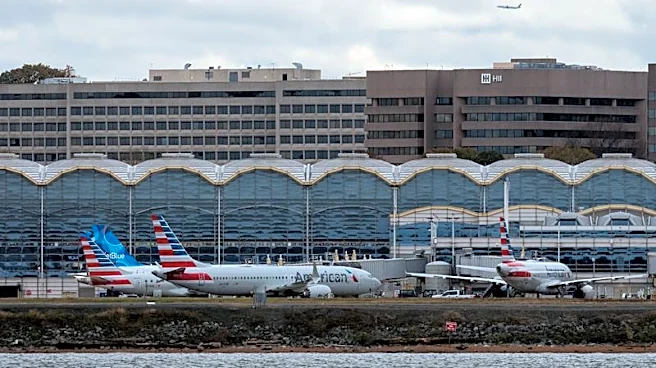
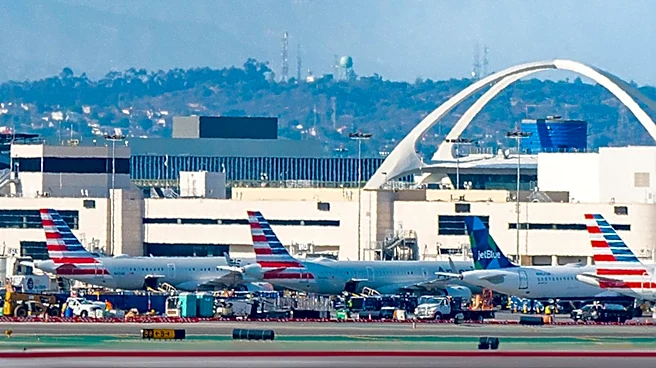
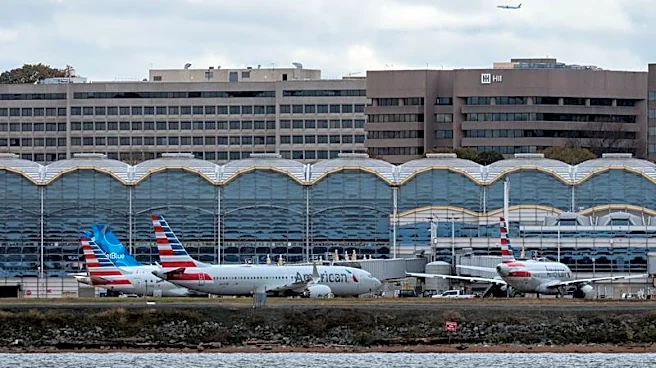
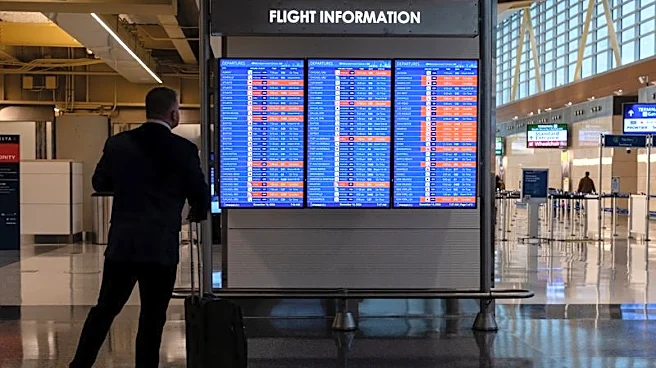
contractor L3Harris Technologies at a radio site in El Dorado, Arkansas, though a definitive cause is still under investigation. The disruption led to widespread cancellations and delays across the country, leaving airlines grappling with out-of-position aircraft and crews. American Airlines experienced an above-average rate of cancellations compared to its U.S. peers, canceling 5,888 flights, or approximately 23% of its schedule, between November 13-16. Cumulatively, about 18% of flights arriving and departing to/from the U.S. were canceled during this period, according to aviation analytics provider Cirium. JetBlue Airways was the most affected U.S. airline, with about 33% of its scheduled flights canceled.
Why It's Important?
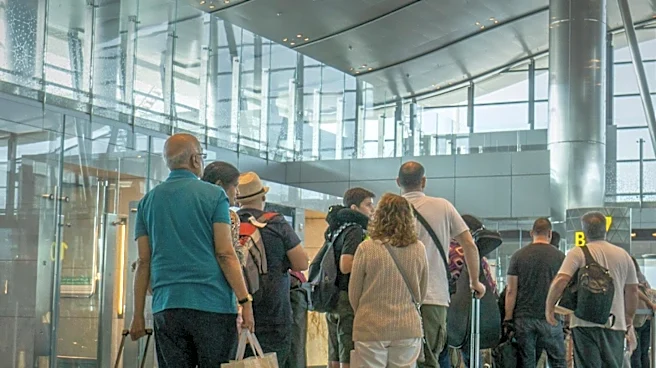
This widespread ground stop highlights the critical vulnerabilities within the U.S. air traffic control infrastructure and the cascading effects that even a localized technical issue can have on national air travel. The incident underscores the reliance of the entire aviation system on complex technological networks and the potential for single points of failure to cause massive economic and logistical disruption. For airlines like American, such events lead to significant financial losses from canceled flights, compensation for passengers, and the costly process of repositioning aircraft and crews. Passengers face immense inconvenience, missed connections, and disrupted travel plans, eroding confidence in air travel reliability. The incident also brings into focus the role of defense contractors in maintaining civilian infrastructure and the need for robust testing and redundancy in critical systems to prevent future occurrences.
What's Next?
As of November 16, American Airlines is still working to smooth out operations, with approximately 160 flight cancellations and over 500 delayed flights. However, the Fort Worth-based carrier anticipates a good start to the week, stating that with crews and aircraft in position and favorable weather expected, they do not foresee additional broad cancellations related to this industry-wide event. Investigations into the definitive cause of the router upgrade failure are ongoing. The aviation industry and regulatory bodies will likely review the incident to identify systemic weaknesses and implement measures to prevent similar disruptions in the future, potentially involving enhanced protocols for system upgrades and improved redundancy in critical infrastructure.
Beyond the Headlines
The incident raises broader questions about the resilience of national infrastructure against technological failures and potential cyber threats. While the current event is attributed to a router upgrade, the interconnectedness of modern systems means that such vulnerabilities could be exploited. This event could prompt a re-evaluation of the security and redundancy measures in place for critical aviation systems, potentially leading to increased investment in cybersecurity and infrastructure modernization. Furthermore, the disproportionate impact on certain airlines, like American and JetBlue, suggests that network architecture and operational models play a significant role in an airline's ability to recover from widespread disruptions. This could influence future strategic planning for route networks and operational resilience across the U.S. airline industry.