





What's Happening?
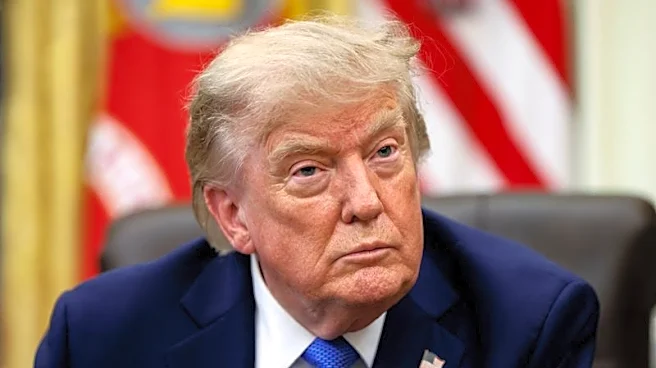
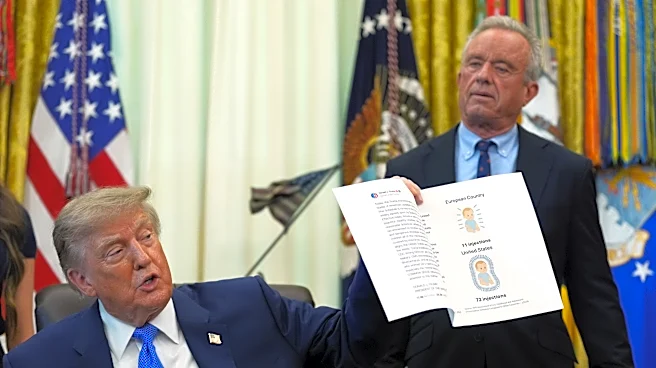
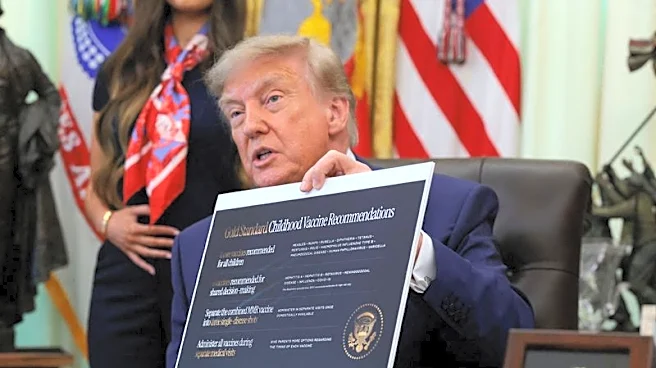
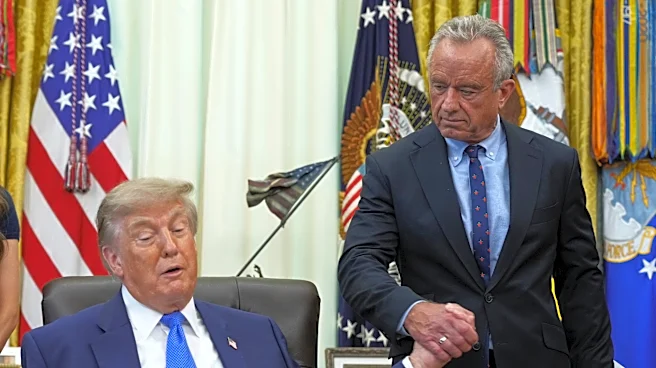
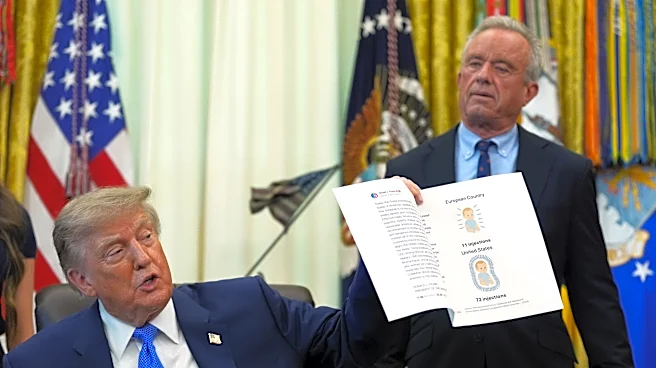
During the signing of an executive order on vaccines, President Trump and Health and Human Services Secretary Robert F. Kennedy Jr. made several false and misleading claims about the U.S. childhood vaccine schedule. The executive order establishes 'Gold
Standard Childhood Vaccine Recommendations' and directs federal agencies and states to advance them. The new recommendations attempt to reduce the vaccine schedule from targeting 17 to 11 diseases. Trump falsely claimed that the U.S. requires 72 vaccine doses for children, a number that is not mandated by any state. The order also recommends splitting up combination vaccines into separate doses, a move criticized by medical experts.
Why It's Important?
The executive order and accompanying claims have significant implications for public trust in vaccines and public health policy. By promoting misleading information, the administration risks undermining confidence in vaccines, which are crucial for preventing disease outbreaks. The order's attempt to align U.S. vaccine recommendations with those of other nations could lead to reduced protection against preventable diseases. Legal challenges are likely, as previous attempts to alter vaccine recommendations have been blocked in court. The situation underscores the importance of basing public health decisions on scientific evidence rather than political considerations.
What's Next?
The executive order is expected to face legal challenges and opposition from medical and public health communities. Experts and organizations may continue to advocate for adherence to the current vaccine schedule, emphasizing the safety and efficacy of combination vaccines. The order's implementation could be delayed or blocked by court rulings. Ongoing discussions and debates are anticipated as stakeholders assess the potential impact of the order on public health and childhood vaccination rates.