


What's Happening?
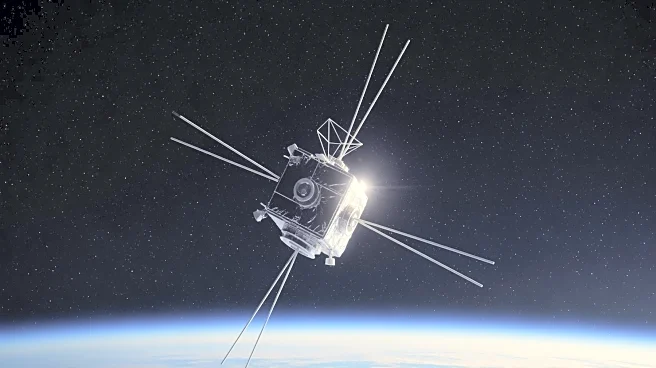
On March 17, 1958, Vanguard 1, America's second satellite, was launched into space, marking a significant milestone in space exploration. Despite being launched just six months after the Soviet Union's Sputnik satellite, Vanguard 1 remains in orbit over
60 years later, making it the longest-orbiting artificial satellite and the oldest human-made object still in space. The satellite, a small metal sphere weighing only 3 pounds and measuring 6.5 inches across, was the first solar-powered spacecraft. It was developed by the U.S. Naval Research Laboratory as part of the International Geophysical Year science program. Vanguard 1 was designed to study the effects of the space environment on satellites and to test the launch capabilities of a three-stage launch vehicle. Initially, scientists predicted that Vanguard 1 could remain in space for about 2,000 years, but later revised this estimate to 240 years due to unexpected space drag.
Why It's Important?
Vanguard 1's successful launch and prolonged orbit have had a lasting impact on space exploration and satellite technology. As the first solar-powered spacecraft, it paved the way for future innovations in satellite design and energy use. The data collected from Vanguard 1's mission helped scientists refine their understanding of Earth's upper atmosphere, contributing to advancements in atmospheric science. Additionally, the project served as a precursor to NASA, with many of the researchers involved in Vanguard 1's development later joining the newly formed space agency. This satellite's enduring presence in orbit underscores the importance of early space exploration efforts and their role in shaping modern space technology and research.
What's Next?
While Vanguard 1 continues to orbit Earth, its eventual re-entry is expected to occur in approximately 240 years, based on revised estimates. In the meantime, the satellite serves as a historical artifact of early space exploration, reminding us of the technological advancements achieved during the mid-20th century. The lessons learned from Vanguard 1's mission continue to inform current and future satellite projects, as researchers and engineers build on its legacy to develop more advanced and efficient space technologies.
Beyond the Headlines
Vanguard 1's story highlights the rapid advancements in space technology and the international competition that characterized the early years of space exploration. The satellite's launch was part of a broader geopolitical context, as the United States and the Soviet Union vied for dominance in space. This competition spurred significant investments in scientific research and technological development, leading to the establishment of NASA and the eventual human landing on the Moon. Vanguard 1's enduring orbit serves as a testament to the ingenuity and determination of the scientists and engineers who contributed to these early achievements in space exploration.