
What's Happening?
Doctors Without Borders (MSF) has agreed to provide Israeli authorities with a list of its employees following the revocation of its operating licenses in Gaza and the West Bank. This decision comes after
Israeli authorities alleged that some MSF staff were involved in terrorist activities linked to Hamas and Palestinian Islamic Jihad. The Israeli Coordinator of Government Activities in the Territories (COGAT) had raised security concerns over MSF's initial refusal to share staff details. MSF described the decision to disclose staff information as an 'exceptional measure' taken after extensive consultations with Palestinian staff, emphasizing that it would only proceed with the consent of the individuals involved. Israeli officials have stated that partial disclosure will not suffice to meet government registration requirements for international organizations operating in conflict zones.
Why It's Important?
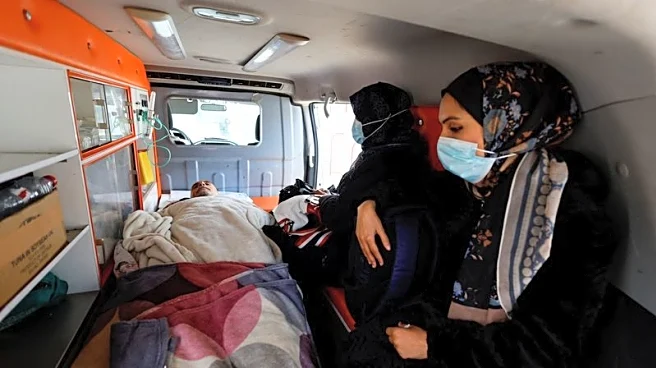
The agreement by MSF to disclose staff information is significant as it highlights the ongoing tension between humanitarian organizations and security protocols in conflict zones. For Israel, ensuring that aid organizations do not inadvertently support terrorist activities is a critical security concern. For MSF, the decision underscores the difficult balance between maintaining operational transparency and protecting staff safety. The outcome of this situation could impact the ability of international aid organizations to operate in Gaza, potentially affecting the delivery of vital medical care to hundreds of thousands of Palestinians. The broader implications also touch on the challenges faced by humanitarian groups in maintaining neutrality while operating in politically sensitive regions.
What's Next?
Israeli authorities will review the information provided by MSF to determine whether to reinstate the organization's operating licenses. The outcome of this review could set a precedent for how international aid organizations are required to operate in conflict zones, particularly in terms of transparency and security compliance. MSF's decision may also prompt other organizations to reassess their operational strategies in similar contexts. The situation remains fluid, with potential reactions from both Israeli officials and international humanitarian groups likely to influence future developments.