



What's Happening?
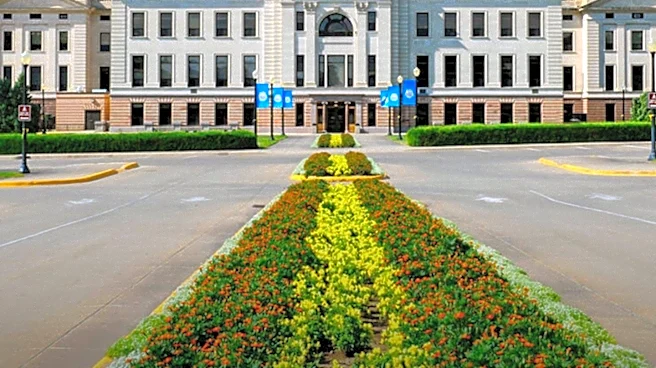
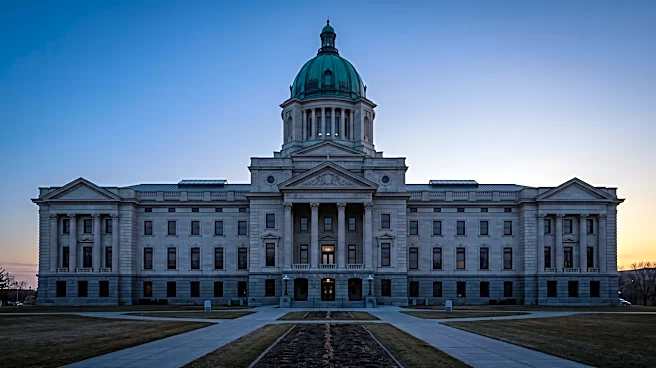
South Dakota Republican Governor Larry Rhoden has ordered flags at the state Capitol in Pierre to be flown at half-staff on October 4, in honor of Lars Herseth, a former Democratic state legislator and 1986 nominee for governor, who passed away at age
80. Herseth died on Saturday of cancer. He was a prominent figure in South Dakota politics, serving in the state House of Representatives from 1975 to 1986 and in the state Senate from 1989 to 1996. During his legislative career, he held leadership positions including House minority leader, Senate president pro tempore, and Senate minority leader. Herseth came from a politically active family; his father, Ralph Herseth, was South Dakota's 21st governor, and his mother, Lorna Herseth, served as Secretary of State. His daughter, Stephanie Herseth Sandlin, was a U.S. House Representative and is currently the president of Augustana University. A memorial service for Lars Herseth is scheduled for 2 p.m. Central time on October 4 at the Johnson Fine Arts Center on the campus of Northern State University in Aberdeen.
Why It's Important?
The order to fly flags at half-staff by Governor Rhoden signifies a bipartisan recognition of Lars Herseth's significant contributions to South Dakota public service. Herseth's career, spanning two decades in the state legislature and a gubernatorial nomination, highlights a legacy of dedication to issues such as agriculture, transportation, economic development, and healthcare. His reputation for collegiality and bipartisanship, even across party lines, is particularly noteworthy in today's political climate. U.S. Senator Mike Rounds, a Republican who served with Herseth, described him as a 'statesman and a problem solver who was willing to work with anyone.' This tribute underscores the value placed on public service and the ability to collaborate for the betterment of the state, transcending political affiliations. The Herseth family's multi-generational involvement in South Dakota politics further emphasizes their enduring impact on the state's governance and civic life, making Lars Herseth's passing a moment of reflection on a significant era of public service.
What's Next?
The immediate next step is the memorial service for Lars Herseth, scheduled for October 4 at the Johnson Fine Arts Center on the Northern State University campus in Aberdeen. On this day, flags at the state Capitol in Pierre will be flown at half-staff as ordered by Governor Rhoden, serving as a public mark of respect. The passing of a figure like Herseth, known for his bipartisan approach and legislative acumen, may prompt reflections within South Dakota's political landscape on the importance of collaboration and statesmanship. While there are no direct policy implications from his passing, the tributes from current and former political leaders, including U.S. Senator Mike Rounds and Lt. Gov. Tony Venhuizen, suggest a continued appreciation for his style of public service. His legacy, particularly his focus on issues like agriculture and his willingness to work across the aisle, could serve as an example for future generations of South Dakota politicians.
Beyond the Headlines
Lars Herseth's life and career offer a deeper insight into the nature of political dynasties and public service in a state like South Dakota. His family's continuous involvement in state politics for 75 years, with his father as governor, mother as Secretary of State, and daughter as a U.S. Representative, illustrates a unique commitment to civic engagement. This multi-generational dedication to public office can foster a deep understanding of state issues and a long-term perspective on governance. Herseth's reputation for collegiality and problem-solving, even as a member of the minority party for much of his career, highlights the importance of personal relationships and mutual respect in legislative processes. His advocacy for women's rights and Native American issues, and his opposition to a bill preventing the recognition of same-sex marriage during his final legislative term, demonstrate a progressive stance that transcended typical partisan divides of his era. His work with Republican Governor Bill Janklow to preserve abandoned rail lines for agricultural transport further exemplifies his pragmatic approach to serving the state's interests, regardless of party affiliation.