






What's Happening?
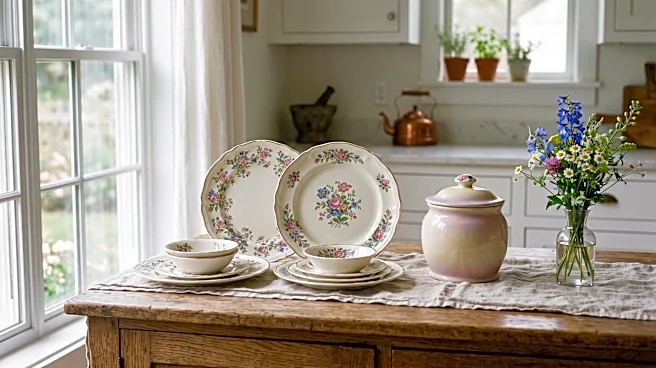
Several American-made dishware brands, now defunct, are being recognized for their historical significance and craftsmanship. These brands, which include Blue Ridge Pottery, Taylor Smith & Taylor, Metlox Manufacturing Company, Buffalo China, and Syracuse
China, were once major manufacturers providing jobs across various U.S. regions. Blue Ridge Pottery, active from 1920 to 1957, was known for its hand-painted floral and animal patterns. Taylor Smith & Taylor, established in 1899, shifted its focus to dishware by the late 1920s, producing notable lines like Lu-Ray Pastels before its closure in 1981. Metlox Manufacturing Company, founded in 1927, initially made ceramic bases for neon signs before pivoting to colorful china sets and unique pieces like a Humpty Dumpty cookie jar. Buffalo China, founded in 1901, supplied dishware to the travel and hospitality industries, including prestigious hotels, before its factory closed in 2004. Syracuse China, originally Onondaga Pottery Company from 1871, was a pioneer in translucent and vitreous china, serving global hospitality and even the U.S. government during World War II, with its factory closing in 2009.
Why It's Important?
The recognition of these defunct U.S. dishware brands underscores a significant chapter in American manufacturing history, particularly in regions like the Rust Belt and Appalachia. These companies were not just producers of household goods; they were major employers, providing generations of jobs and contributing substantially to local economies. Their decline and eventual closure reflect broader shifts in the U.S. manufacturing landscape, including increased competition and outsourcing. The continued interest in these vintage items highlights a cultural appreciation for American craftsmanship and design from the 20th century. Furthermore, the mention of lead in some older paints from brands like Blue Ridge Pottery serves as a reminder of past manufacturing practices and potential health considerations associated with vintage items, influencing consumer awareness and safety standards for modern products.
What's Next?
The enduring appeal of these vintage American dishware brands suggests a continued market for secondhand items, likely fueled by collectors, antique enthusiasts, and those seeking unique, historically significant pieces. Online marketplaces and thrift stores will remain key venues for discovering these items. This trend could also inspire contemporary designers and manufacturers to draw inspiration from these historical designs, potentially leading to modern interpretations or reproductions that honor the legacy of American craftsmanship. Additionally, the historical context provided by these brands may encourage further research into the economic and social impact of manufacturing industries in the U.S., offering insights into industrial heritage and its evolution.
Beyond the Headlines
The story of these American dishware brands extends beyond mere commerce, touching upon themes of industrial heritage, labor history, and cultural identity. The transition from a manufacturing powerhouse to a more service-oriented economy is subtly reflected in the closure of these once-dominant companies. The artistic value and craftsmanship of these items, often hand-painted or innovatively designed, speak to a period when mass production still allowed for significant artistic input. The fact that some of these brands, like Syracuse China, served the White House and military, highlights their integral role in national life. The transformation of former factory sites, such as Metlox Manufacturing Company's into a shopping mall, symbolizes the ongoing repurposing of industrial spaces and the evolution of American communities.