
What's Happening?
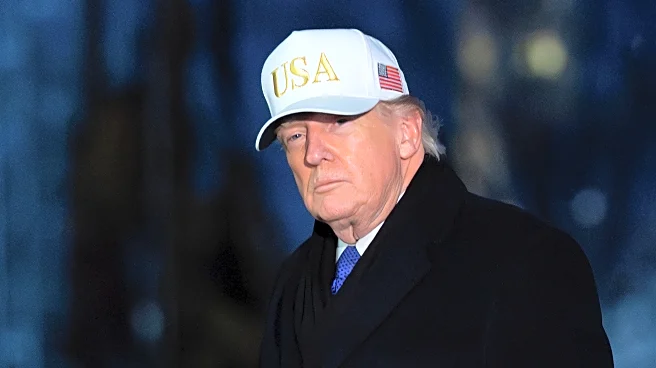
President Trump has called on NATO to back the United States' efforts to acquire Greenland, emphasizing the strategic importance of the island for national security. In a statement on Truth Social, Trump argued that Greenland's acquisition would enhance
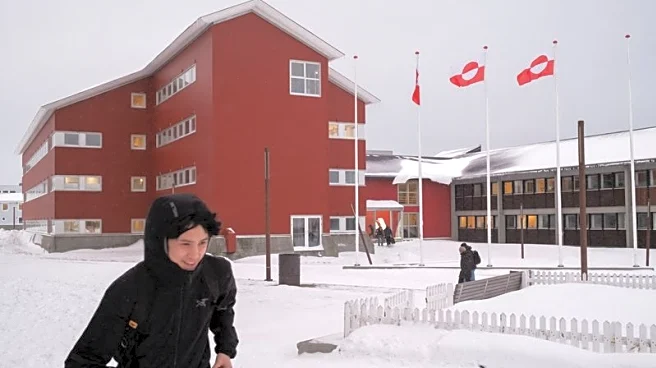
NATO's effectiveness and prevent potential control by Russia or China. This comes amid ongoing tensions with Greenland's leadership, who have expressed a preference to remain under Danish governance. The U.S. administration has been vocal about its interest in Greenland, citing its strategic location and potential military advantages. The issue has sparked diplomatic discussions, with Denmark and Greenland's leaders set to meet U.S. officials to address the future of the Arctic territory.
Why It's Important?
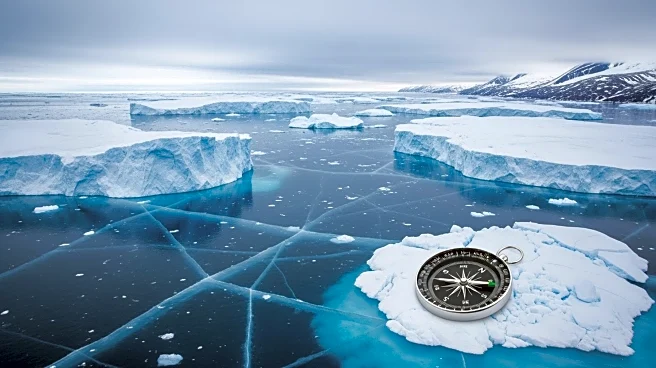
The push for Greenland highlights the geopolitical significance of the Arctic region, which is becoming increasingly important due to its strategic location and natural resources. For the U.S., acquiring Greenland could bolster its military presence and provide a strategic advantage in missile defense. However, the move has strained relations with Denmark, a key NATO ally, and raised concerns about sovereignty and international law. The situation underscores the complex dynamics of Arctic geopolitics, where global powers are vying for influence. The outcome of these discussions could have lasting implications for U.S. foreign policy and NATO's strategic posture in the region.
What's Next?
As discussions continue, the U.S. is likely to face diplomatic challenges in convincing Greenland and Denmark to consider its proposal. The upcoming meeting at the White House will be crucial in determining the future of U.S.-Greenland relations. Denmark has indicated a willingness to strengthen its military presence in Greenland, which could complicate U.S. efforts. Additionally, NATO's response to the U.S. proposal will be pivotal, as member states weigh the strategic benefits against potential diplomatic fallout. The situation remains fluid, with potential for further negotiations and international scrutiny.