






What's Happening?
Artisan cheese producers in the northeastern U.S. are facing an outbreak of Aspergillus westerdijkiae, a toxic mold that is causing cheeses to rot instead of ripen. This mold, previously not known to inhabit cheese, is secreting dangerous toxins, including
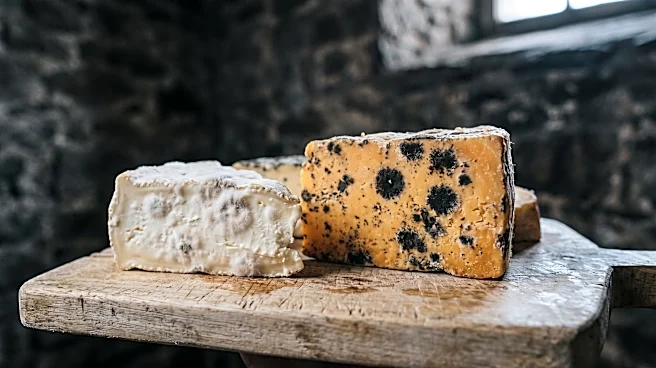
ochratoxins, which can damage kidneys. Tufts University microbiologist Benjamin Wolfe and his team have been investigating this issue, noting that the mold leaves visible damage such as flaking black patches on goat cheese and fuzzy white or dusty black patches on block cheddars. The mold also produces antimicrobial metabolites like penicillic acid, which prevent beneficial bacteria and fungi from colonizing the cheese rind. The outbreak has affected facilities in Massachusetts, Connecticut, and Vermont, raising concerns about aesthetic, flavor, and potential safety issues in artisan cheese production. Researchers are exploring whether the mold was imported, possibly via ingredients like salt, as it does not naturally occur in the affected region.
Why It's Important?
The emergence of Aspergillus westerdijkiae in artisan cheeses poses a significant threat to the U.S. dairy and specialty food industries. The contamination not only leads to substantial financial losses for cheesemakers due to spoiled products but also raises serious public health concerns. Ochratoxins produced by this mold are known to be harmful, particularly to kidney function, which could lead to product recalls and a loss of consumer trust in artisan cheese products. This situation highlights vulnerabilities in food safety protocols and the potential for new microbial threats to impact established food production processes. The need for effective mitigation strategies, such as temperature control in cheese caves and further research into the mold's origin and spread, is critical to protect both producers and consumers. The incident underscores the importance of ongoing vigilance and scientific research in safeguarding the food supply chain against emerging contaminants.
What's Next?
Researchers are continuing to investigate the origin of Aspergillus westerdijkiae, with a particular focus on whether it was imported through ingredients like sea salt. While this research is ongoing, a practical solution for cheesemakers has been identified: maintaining cheese cave temperatures at or below 50°F (10°C), which significantly slows the mold's growth. Cheesemakers who have implemented this temperature control have reported a halt in the rotting process. Future research will likely concentrate on understanding how these spoilage molds spread globally and enter food production environments, potentially leading to new guidelines for ingredient sourcing and facility hygiene. The U.S. Food and Drug Administration (FDA) and other food safety organizations may also issue new recommendations or regulations for artisan cheese production to prevent future outbreaks and ensure consumer safety.
Beyond the Headlines
This incident with Aspergillus westerdijkiae in artisan cheeses points to broader implications regarding global food trade and environmental changes. The possibility that the mold was imported on ingredients like salt highlights the interconnectedness of global supply chains and the potential for non-native species to establish themselves in new environments, especially with changing climate conditions that might favor their growth. This situation also underscores the delicate balance of microbial ecosystems in food production; beneficial fungi and bacteria are essential for cheese ripening, but their displacement by harmful molds can have cascading effects. The challenge for the artisan cheese industry is to adapt to these new threats while maintaining traditional production methods that are often central to their product's identity and quality. This could lead to innovations in microbial management and biosecurity within food production facilities, balancing tradition with modern food safety science.