






What's Happening?
A modern farmhouse located on a peaceful Portsmouth cove in New Hampshire, known as House on the Point, has received the 2026 AIA New Hampshire Citation Award for Excellence in Residential Architectural Design. Designed by Maugel DeStefano Architects,
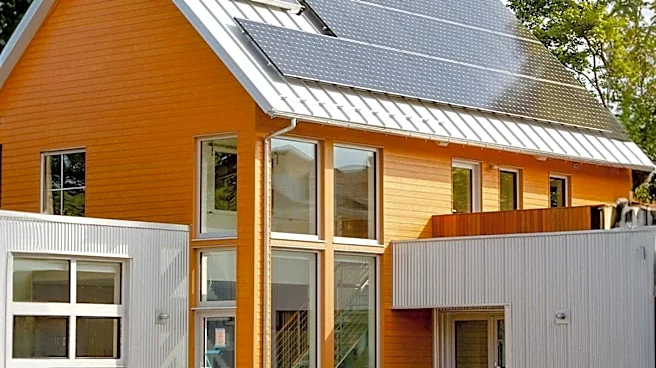
this 4,000-square-foot home combines traditional form with modern details, featuring white siding, charred black wood, and a standing seam metal roof. The residence is notable for its sustainable design elements, including rooftop solar panels for electricity generation and a geothermal system for heating and cooling. Large south-facing windows maximize water views and winter sun, while smaller north-facing windows help reduce heat loss. The construction also incorporates double stud walls for enhanced insulation, making the home net zero-ready. The exterior boasts curved stone walls leading to a covered front porch, and a boardwalk connects the lawn to a private dock on the waterfront.
Why It's Important?
This award-winning New Hampshire farmhouse highlights a growing trend in U.S. residential architecture towards integrating sustainable practices with aesthetic design. The emphasis on net zero-ready construction, utilizing solar and geothermal energy, sets a precedent for future home building in the region and potentially nationwide. For the U.S. construction and real estate industries, this project demonstrates that eco-friendly features can be seamlessly incorporated into high-end residential properties, appealing to environmentally conscious buyers and potentially increasing property values. The use of durable materials like charred wood (Shou Sugi Ban) and recycled fly ash siding also showcases innovative material applications that contribute to longevity and reduced environmental impact. This could influence building codes and consumer expectations, pushing for more sustainable and energy-efficient homes across the country.
What's Next?
The recognition of House on the Point with a prestigious architectural award is likely to inspire other architects, builders, and homeowners to adopt similar sustainable design principles. This could lead to an increased demand for net zero-ready homes and the technologies that support them, such as solar panels and geothermal systems, in the U.S. housing market. The success of this project may also encourage local and state governments to offer more incentives for sustainable building practices, further accelerating the adoption of green construction. Additionally, the project's blend of traditional aesthetics with modern sustainability could influence design trends, promoting a style that is both visually appealing and environmentally responsible.
Beyond the Headlines
Beyond its immediate architectural acclaim, this modern farmhouse represents a broader cultural shift towards valuing sustainability and environmental responsibility in personal living spaces. The integration of advanced energy systems and recycled materials reflects a growing awareness of climate change and resource depletion among homeowners. This development could foster a deeper connection between residents and their environment, encouraging a lifestyle that minimizes ecological footprint. The project also underscores the potential for design to not only be functional and beautiful but also ethically sound, contributing to a more sustainable future for residential development in the United States.