








What's Happening?
A geologist in California, Brigid Lynch of Balance Hydrologics, discovered a well-preserved mastodon molar in a creek bed within a Midpeninsula Regional Open Space District preserve in San Mateo County. The discovery occurred during a habitat restoration
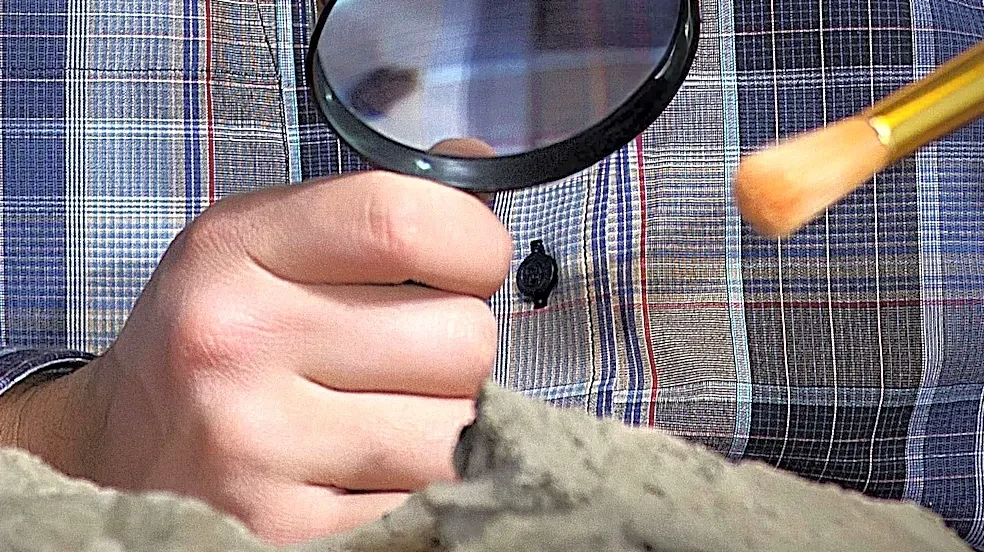
project aimed at improving conditions for threatened California red-legged frogs. Initially unsure of the object's nature, Lynch used a Google reverse image search, which suggested it was an Ice Age mastodon tooth. A paleontologist, Wayne Thompson of Pacific Paleontology, subsequently confirmed it as an upper left molar from a Pacific mastodon (Mammut pacificus). The tooth measures approximately 8.5 inches long, 7 inches deep, and 3 inches wide, retaining both its crown and roots, making it an exceptionally complete specimen for the region. Its age is estimated to be at least 10,000 years old, with some paleontologists suggesting it could be between 50,000 and 100,000 years old.
Why It's Important?
This discovery is significant for understanding the ancient ecosystems and biodiversity of the Bay Area. Pacific mastodons, large herbivores distinct from mammoths, roamed western North America during the Pleistocene epoch, which concluded about 11,700 years ago. The well-preserved nature of this molar provides a rare opportunity for researchers to study the animal's diet, environment, and the broader prehistoric landscape. Such findings offer crucial clues about past environmental changes and the types of megafauna that once inhabited the region. The donation of the fossil to Stanford University for further scientific study, including 3D scanning for educational outreach, ensures its contribution to both academic research and public understanding of natural history. The find also highlights an unexpected connection between modern conservation efforts and paleontological discoveries, as it was found during a project focused on current endangered species.
What's Next?
Researchers at Stanford University’s Doerr School of Sustainability plan to analyze the mastodon tooth to determine its precise age, the animal's diet, and the environmental conditions of its time. This analysis will involve detailed scientific study to extract as much information as possible from the fossil. Stanford will also create a 3D scan of the tooth, which Midpeninsula Regional Open Space District will use for educational purposes, allowing the public to examine the specimen without handling the original. The exact location of the discovery will remain undisclosed to prevent unauthorized fossil hunting. Paleontologist Wayne Thompson has speculated that the tooth might have recently separated from a skull still buried at the site, though this remains unconfirmed. Future investigations might explore the possibility of further remains at the discovery site.
Beyond the Headlines
The discovery of this mastodon tooth underscores the rich paleontological heritage hidden within seemingly ordinary landscapes, even in densely populated areas like California. It serves as a powerful reminder of the vast stretches of time and the dramatic ecological shifts that have occurred on Earth. The use of modern technology, such as Google's reverse image search, in identifying such an ancient artifact also highlights the evolving tools available for scientific discovery. Furthermore, the decision to keep the discovery site confidential reflects a growing awareness of the need to protect sensitive paleontological sites from disturbance, balancing scientific inquiry with preservation. This event also subtly connects the deep past with present-day environmental concerns, as the discovery was made during a project to protect a currently threatened species, illustrating the continuous narrative of life and extinction.