

What's Happening?
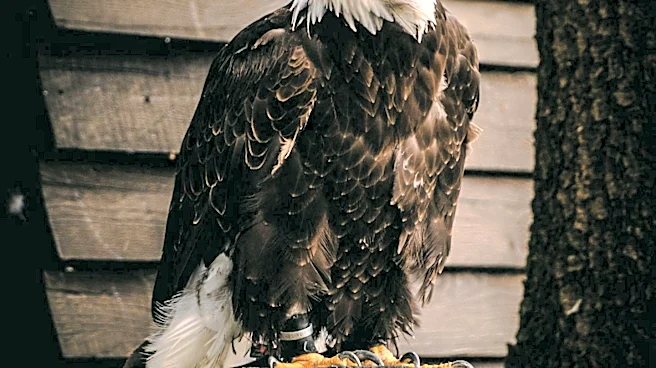
The U.S. Fish and Wildlife Service has rescinded its directive to euthanize Phoenix, a rescued bald eagle in Tennessee. The initial order had mandated the bird's euthanasia by Monday, despite a veterinarian's recommendation for sanctuary placement and an agreement
for a permanent home. Larry Eaton, an Athens, Tennessee, wildlife rescuer and town mayor, had been advocating for Phoenix's life. Phoenix, a 5-year-old female, suffered a fractured radius and ulna in her left wing and underwent surgery in April. Although she received physical therapy and rehabilitation at the Owl Ridge Raptor Center, her flying ability remains limited, making her unsuitable for release into the wild. After extensive efforts by Eaton, including contacting state and federal lawmakers, the Fish and Wildlife Service announced it is no longer recommending euthanasia and is actively exploring other options for the eagle's continued care. Phoenix is now slated for placement at Radnor Lake State Park in Nashville.
Why It's Important?
This reversal is significant as it highlights the impact of public advocacy and inter-agency cooperation in wildlife conservation efforts. The bald eagle, as the national emblem, holds symbolic importance, and the initial euthanasia order sparked considerable public concern. The case underscores the complexities involved in managing injured wildlife, balancing humane treatment with the practicalities of rehabilitation and long-term care. The decision to reverse the euthanasia order demonstrates flexibility within federal agencies when presented with compelling arguments and viable alternatives, such as sanctuary placement. This outcome provides a positive precedent for future wildlife rescue cases, emphasizing that every effort should be made to preserve the lives of iconic species, especially when suitable long-term care facilities are available. It also showcases the dedication of local wildlife rescuers and their ability to influence federal decisions.
What's Next?
Phoenix, the rescued bald eagle, will now be placed in a permanent home at Radnor Lake State Park in Nashville. The park's Barbara J. Mapp Aviary Education Center already houses other eagles and birds of prey, providing a suitable environment for Phoenix, who has adapted well to captivity. The Owl Ridge Raptor Center, where Phoenix is currently housed, will facilitate her transfer. This outcome ensures Phoenix will live a long and happy life in a modified enclosure that suits her needs. This case may also encourage further collaboration between federal wildlife agencies, local rescuers, and sanctuaries to establish clearer protocols for the long-term care of non-releasable injured wildlife, particularly for protected species like bald eagles.
Beyond the Headlines
The saga of Phoenix the bald eagle extends beyond a single rescue, touching upon broader themes of human-wildlife coexistence and the ethical responsibilities towards injured animals. The initial directive to euthanize, despite a veterinarian's recommendation for sanctuary, raises questions about bureaucratic decision-making processes within wildlife management and the potential for disconnect between field expertise and policy. The successful advocacy campaign for Phoenix underscores the power of public engagement and the emotional connection many Americans have with wildlife, particularly national symbols. This case could serve as a catalyst for re-evaluating existing guidelines for non-releasable wildlife, potentially leading to more emphasis on sanctuary placement over euthanasia when viable options exist. It also highlights the critical role of wildlife rehabilitation centers and sanctuaries in providing a second chance for animals that cannot survive in the wild, reinforcing their value in conservation efforts.