



What's Happening?
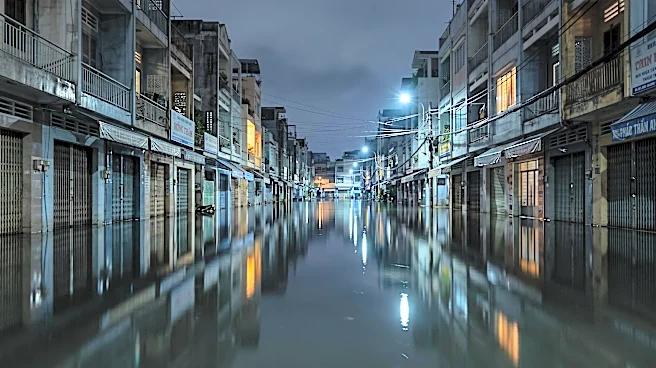
On the evening of October 1st, Ho Chi Minh City experienced significant flooding and severe traffic congestion due to a combination of heavy rainfall and high tides. The downpour, which began around 5 PM and intensified by 6 PM in central areas, coincided
with rush hour and elevated tidal levels. This confluence of factors led to deep inundation on numerous roads, making travel extremely difficult for residents. Areas such as Dien Bien Phu, Phan Dinh Phung, No Trang Long, and Do Muoi streets were particularly affected, with some sections submerged under 20 to over 50 centimeters of water. Many vehicles stalled, forcing commuters to dismount and push their motorbikes through the flooded streets. The situation was exacerbated in low-lying areas near rivers and canals, where water entered homes, marking what many residents described as the most severe flooding of the current rainy season.
Why It's Important?
This event highlights the persistent infrastructure challenges faced by rapidly urbanizing cities like Ho Chi Minh City, particularly concerning drainage systems and urban planning in the face of climate change and rising sea levels. The severe traffic jams and widespread flooding disrupt daily life, impact economic productivity by delaying commutes and deliveries, and pose public health risks due to contaminated water. For businesses, such disruptions can lead to lost revenue, damaged goods, and increased operational costs. Residents face property damage, health hazards, and significant inconvenience. The recurring nature of these events underscores the urgent need for comprehensive urban resilience strategies, including improved drainage, flood barriers, and sustainable development practices, to mitigate the socio-economic impacts of extreme weather events.
What's Next?
In the immediate aftermath, authorities will likely focus on clearing floodwaters, managing traffic, and assessing damage. In the longer term, the incident will likely reignite discussions and potentially accelerate plans for infrastructure upgrades aimed at improving the city's flood resilience. This could include investments in new drainage systems, pumping stations, and urban planning initiatives that consider the impacts of climate change and tidal patterns. Public awareness campaigns on flood preparedness and safety measures may also be implemented. Residents will need to continue adapting to these conditions, potentially seeking alternative routes or modes of transport during heavy rain events. The incident may also prompt a review of existing urban development projects to ensure they incorporate adequate flood mitigation measures.
Beyond the Headlines
The recurrent flooding in Ho Chi Minh City, exacerbated by heavy rains and high tides, points to a broader global challenge faced by coastal cities: the intersection of rapid urbanization and climate change. This situation raises critical questions about sustainable urban development, the effectiveness of current infrastructure, and the long-term viability of certain low-lying areas. Ethically, it highlights the responsibility of urban planners and governments to protect vulnerable populations and ensure equitable access to safe living conditions. Culturally, such events can foster community resilience and mutual aid, but also lead to frustration and calls for greater accountability from local authorities. The economic implications extend beyond immediate losses, potentially affecting property values, investment attractiveness, and the overall quality of life, prompting a re-evaluation of how cities can adapt to an increasingly unpredictable climate.